
Walleye or Sauger? Look at the Tail and the Dorsal Fin
By IdentifyThese Editorial · Reviewed · 3 min read
Walleye and sauger overlap widely, especially in big rivers and their reservoirs, and they are regulated differently in most of that range. Fortunately both distinguishing features are on the fins and take a second to check.
1. The tail tip
Look at the lower lobe of the tail.
- Walleye — a distinct white tip on the lower lobe.
- Sauger — no white tip.
This is the fastest check and it is reliable on adult fish.
2. The spiny dorsal fin
Look at the membrane between the spines of the first, spiny dorsal fin.
- Sauger — clear rows of dark spots across the membrane, like a pattern printed on it.
- Walleye — no spot rows, but usually a dark blotch at the rear base of that fin.
Between these two features, an adult fish is identifiable with confidence.
Supporting differences
Body markings. Sauger has distinct dark saddle-shaped blotches across the back. Walleye is more evenly mottled.
Colour. Sauger runs brassy-brown; walleye runs olive-gold. Water clarity affects both.
Size. Sauger are smaller on average, commonly under three pounds, where walleye routinely exceed that.
Habitat. Sauger tolerate turbid, fast river water better and are more strongly associated with big rivers. Walleye are more common in clearer lakes. Both rules have plenty of exceptions.
The saugeye complication
Walleye and sauger hybridise, and the resulting saugeye is stocked deliberately in many reservoirs because it grows fast and tolerates conditions neither parent handles well.
Saugeye show intermediate features: faint dorsal spotting and a faint tail tip, or one feature but not the other. If a fish looks ambiguous, that is a real possibility rather than a failure of observation.
Most states regulate saugeye as one parent species or the other, so this is precisely the situation where checking your local regulations matters.
Quick reference
| Walleye | Sauger | |
|---|---|---|
| White tail tip | Yes | No |
| Dorsal fin spots | No rows | Distinct rows |
| Dark blotch on rear of spiny dorsal | Yes | No |
| Back pattern | Even mottling | Dark saddles |
| Typical size | 1–8 lb | 0.5–3 lb |
| Water | Clearer lakes and rivers | Turbid rivers |
And it is not a perch
Yellow perch are sometimes brought into the confusion because they share the two-dorsal-fin arrangement. They are easy to exclude: perch have bold dark vertical bars, no canine teeth, and rarely exceed a pound. Walleye and sauger both have obvious canines and a very different build.
Where each one lives
Habitat is not decisive but it shifts the odds enough to be worth weighing:
| Walleye | Sauger | |
|---|---|---|
| Water clarity | Clear to moderately stained | Tolerates heavy turbidity |
| Current | Lakes and slower rivers | Big rivers and tailwaters |
| Depth | Follows structure, moves shallow at dusk | Deeper, closer to the bottom |
| Time of day | Strongly low-light | Less tied to light levels |
Sauger evolved for the silty Missouri and Mississippi systems, which is why they persist in water where a walleye's famously light-sensitive eye stops being an advantage.
The eye that names the fish
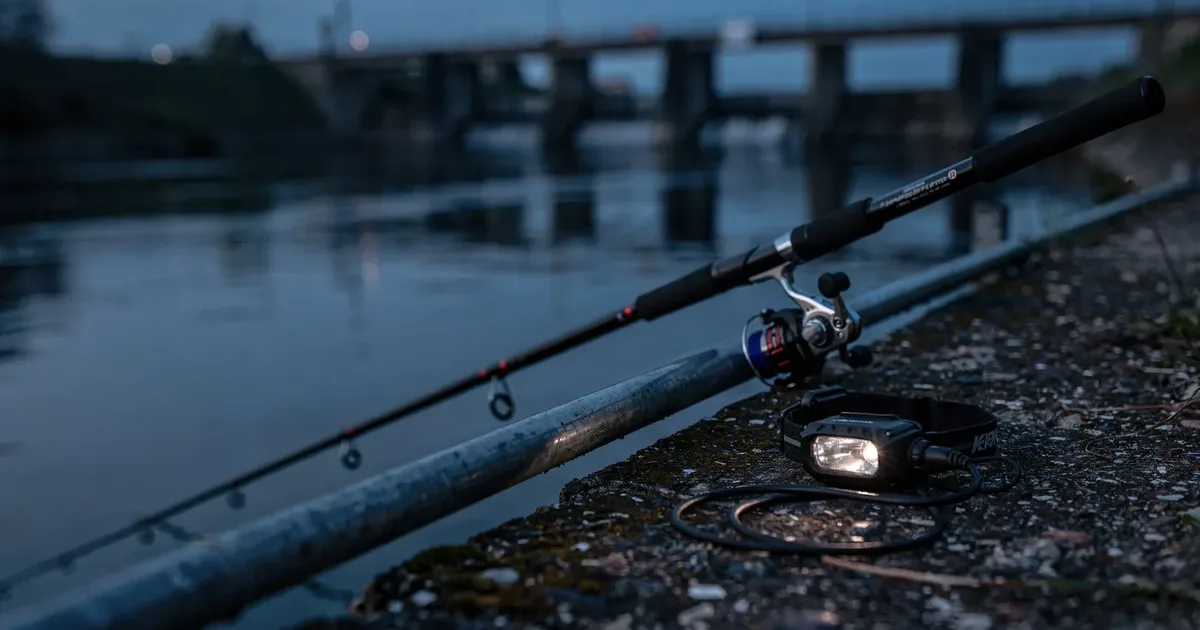
Both species have a reflective layer behind the retina — the tapetum lucidum — which bounces light back through it a second time. That is why the eye glows in a headlamp, why the fish feeds hard at dawn and dusk, and where the name walleye comes from.
It also explains the fishing advice that follows from it: both species sit below the light and look up, so a bait presented above them is easier for them to see than one dragged past at their own level.
Run the key if the fin markings are ambiguous — and if two species on your list have different limits, release it.
Species referenced
Why this matters beyond curiosity
- Look-alike species often carry different limits. Walleye and sauger, black and white crappie, pike and muskie, blue and channel catfish — each pair can have different sizes, seasons and daily limits in the same water.
- Check it before the fish goes in the livewell. Most of the tests on this site take seconds and are far easier on a fish you are still holding.
- If you cannot tell, release it. That is the answer that is never wrong, and it is the one a warden will not argue with.
- Regulations are set by your state or province and change annually. This site identifies fish; it does not tell you the rules. Check the current regulations for the water you are on.
Keep reading
- Channel, Blue or Flathead? Three Catfish, Three ChecksThe anal fin settles channel from blue — count the rays and look at its shape. Flathead is a different animal entirely, and the jaw shows it.
- Black Crappie or White Crappie? Count the Dorsal SpinesBlack crappie have seven or eight dorsal spines, white crappie five or six. Colour and pattern both fail; the spine count does not.
- Counting Fin Rays and Spines: The Skill That Settles Most Fish IDsColour changes, counts do not. Learning to separate spines from soft rays and count them turns most freshwater identifications into arithmetic.