
Guides
Each guide answers one question completely, using checks you can make in seconds on the water.
Bluegill, Pumpkinseed or Redear? The Ear Flap Tells You
The flap behind the gill cover — its colour, its edge and whether it is stiff — separates the common sunfishes faster than body colour ever will.
3 min read
Brook, Brown or Rainbow? Trout Identification That Works
Light spots on a dark body means brook trout. Dark spots on a light body means brown or rainbow — and the tail separates those two.
3 min read
Channel, Blue or Flathead? Three Catfish, Three Checks
The anal fin settles channel from blue — count the rays and look at its shape. Flathead is a different animal entirely, and the jaw shows it.
3 min read
Northern Pike or Muskellunge? Look at the Cheek and Count the Pores
Pike have light markings on dark; muskie have dark markings on light. When markings fail, cheek scaling and the pore count under the jaw settle it.
3 min read
Black Crappie or White Crappie? Count the Dorsal Spines
Black crappie have seven or eight dorsal spines, white crappie five or six. Colour and pattern both fail; the spine count does not.
3 min read
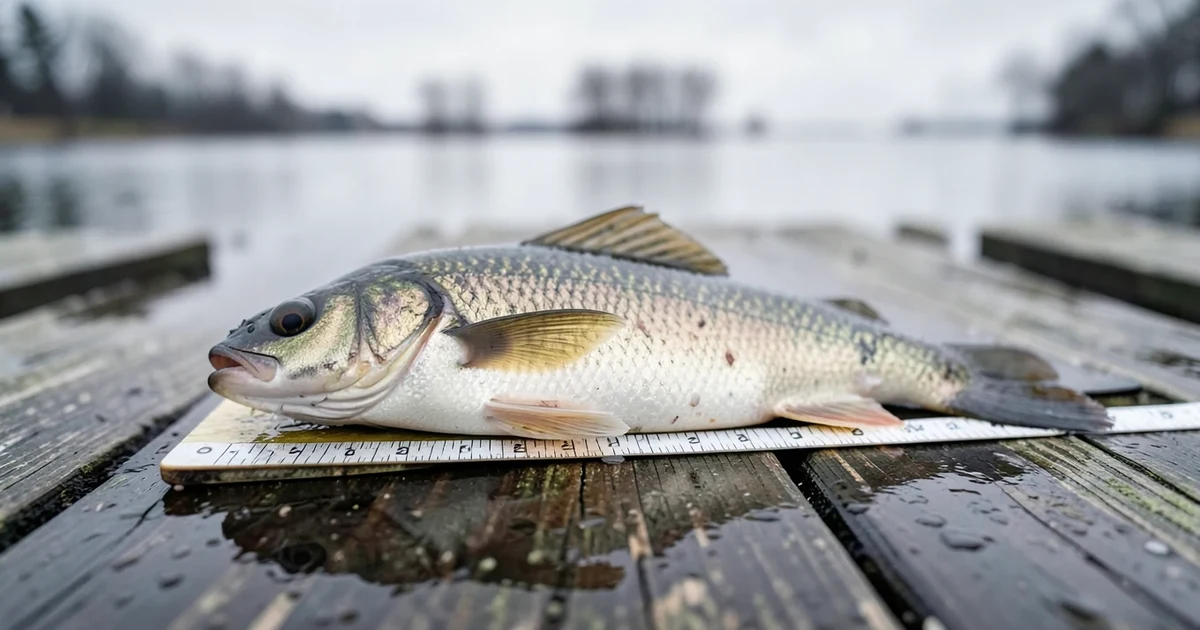
Counting Fin Rays and Spines: The Skill That Settles Most Fish IDs
Colour changes, counts do not. Learning to separate spines from soft rays and count them turns most freshwater identifications into arithmetic.
4 min read
Largemouth, Smallmouth or Spotted? Three Checks
The three black bass share water and often share a limit — but not always. Jaw length, stripe direction and a rough patch on the tongue separate all three in seconds.
3 min read
Walleye or Sauger? Look at the Tail and the Dorsal Fin
Two features separate them, both on the fins, and both visible in a second. They frequently carry different limits and they hybridise, which complicates things further.
3 min read