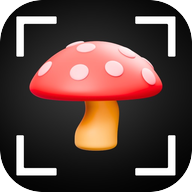

Fly Agaric
ToxicAmanita muscaria · also called fly amanita
The storybook mushroom, and genuinely toxic. It contains ibotenic acid and muscimol, which act on the nervous system rather than the liver, producing confusion, nausea, sedation and sometimes delirium. It rarely kills a healthy adult but frequently results in hospital admission, and it is dangerous to children and pets.
Quick facts
- If eaten
- Toxic. Effects begin within a couple of hours and involve nausea, confusion, drowsiness and sometimes hallucinations and delirium. Deaths are rare in adults but children and dogs are at real risk. Traditional preparation methods circulating online do not make it reliably safe.
- Under the cap
- gills
- Spore print
- white
- Cap
- Bright scarlet to orange, covered in white or pale yellow warty patches that rain can wash off entirely — a washed specimen can look plain red.
- Stem
- White, with a ring near the top and a bulbous base ringed with concentric scaly bands rather than a clean sac.
- Growing on
- soil, conifer litter, hardwood litter
- Season
- Late summer through autumn.
How to identify it
- Red or orange cap with white warty patches, though rain removes them.
- White gills, white spore print, ring on the stem.
- Bulbous stem base with concentric scaly rings rather than a membranous cup.
- Almost always near birch, pine or spruce — it is a mycorrhizal partner of those trees.
What it is confused with
One test settles each of these.
Caesar's mushroom
Caesar's has yellow gills and stem and a clean white sac at the base, without warts on an orange cap.
Read this before anything else
- Never eat a wild mushroom identified by a website or an app.That includes this one. These tools narrow possibilities; they cannot see your mushroom, its base, its smell or its habitat, and the difference between a meal and a liver transplant is sometimes a feature buried in the soil.
- Get it confirmed in person by an experienced local forager or a mycological society. Most regions have one, most run free identification sessions, and they will look at the actual specimen.
- Dig, do not pull. The cup at the base of a death cap is often underground. Pulling the mushroom leaves the most important feature in the soil.
- If someone has eaten a wild mushroom and feels unwell, call poison control now — in the US, 1-800-222-1222. Do not wait for symptoms to worsen. Amatoxin poisoning has a false recovery phase, and delayed treatment is what makes it fatal. Save any uneaten pieces for identification.