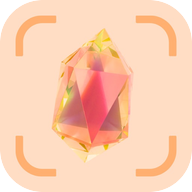

Dolomite
CaMg(CO₃)₂ · Trigonal · also called pearl spar
Dolomite is calcite's magnesium-bearing cousin and is almost indistinguishable by eye. The scratch-then-acid test is the standard separation, and the curved, saddle-shaped crystals are a reliable second opinion.
Properties
- Mohs hardness
- 3.5–4
- Streak
- white
- Lustre
- vitreous, pearly
- Colour
- Typically white to pale pink or buff. A warm pinkish cast is common enough to be a hint.
- Cleavage
- Perfect rhombohedral cleavage, as in calcite.
- Fracture
- Conchoidal
- Specific gravity
- 2.84–2.86 (water = 1)
- Magnetism
- Not magnetic
- Acid test
- Fizzes only when powdered
- UV
- Some specimens fluoresce
Tests that confirm dolomite
- Scratch the surface to powder first, then apply acid — dolomite fizzes only on the powder.
- Crystal faces are often curved into a saddle shape, which calcite never does.
- Slightly harder than calcite; a copper coin struggles.
What dolomite gets confused with
Each of these is settled by one test. Run that test first.
Calcite fizzes immediately in acid; dolomite needs to be powdered first.
Magnesite
Magnesite is harder to tell apart in the field and usually needs chemical testing.
Where it is found
Dolostone rock formations, hydrothermal veins, and as a companion to lead-zinc ores.
Is it worth anything?
Low value except for well-formed saddle crystal groups.