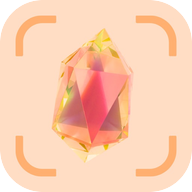

Garnet
X₃Y₂(SiO₄)₃ · Cubic · also called almandine, pyrope, grossular, spessartine
Garnet is the classic red crystal of metamorphic schist, and its rounded many-sided crystals embedded in mica are one of the most satisfying things a beginner can find. It is hard, dense, has no cleavage, and comes in a wider colour range than its reputation suggests.
Properties
- Mohs hardness
- 6.5–7.5
- Streak
- white
- Lustre
- vitreous, resinous
- Colour
- Deep brownish red is by far the most common. Green (tsavorite, demantoid) and orange (spessartine) varieties exist but are much rarer.
- Cleavage
- No cleavage — a key point, since it is often confused with cleavable red minerals.
- Fracture
- Conchoidal to uneven
- Specific gravity
- 3.5–4.3 (water = 1)
- Magnetism
- Not magnetic
- Acid test
- No reaction
- UV
- Not fluorescent
Tests that confirm garnet
- Well-formed garnets are rounded, many-faced balls (12 or 24 faces) sitting in the rock — a very recognisable habit.
- Hardness above 7 in most varieties; it scratches glass firmly.
- Heavier than quartz, and noticeably so once you compare them.
What garnet gets confused with
Each of these is settled by one test. Run that test first.
Corundum is hardness 9 and will scratch garnet; garnet cannot scratch it back.
Sphalerite is much softer and shows six cleavage directions.
Where it is found
Mica schist and gneiss, and concentrated in stream and beach sands because it resists weathering.
Is it worth anything?
Common almandine has little value. Clean, well-coloured gem material — particularly green demantoid and tsavorite — is genuinely valuable.