

Guides
Each guide answers one question completely, using observations you can make from a safe distance.
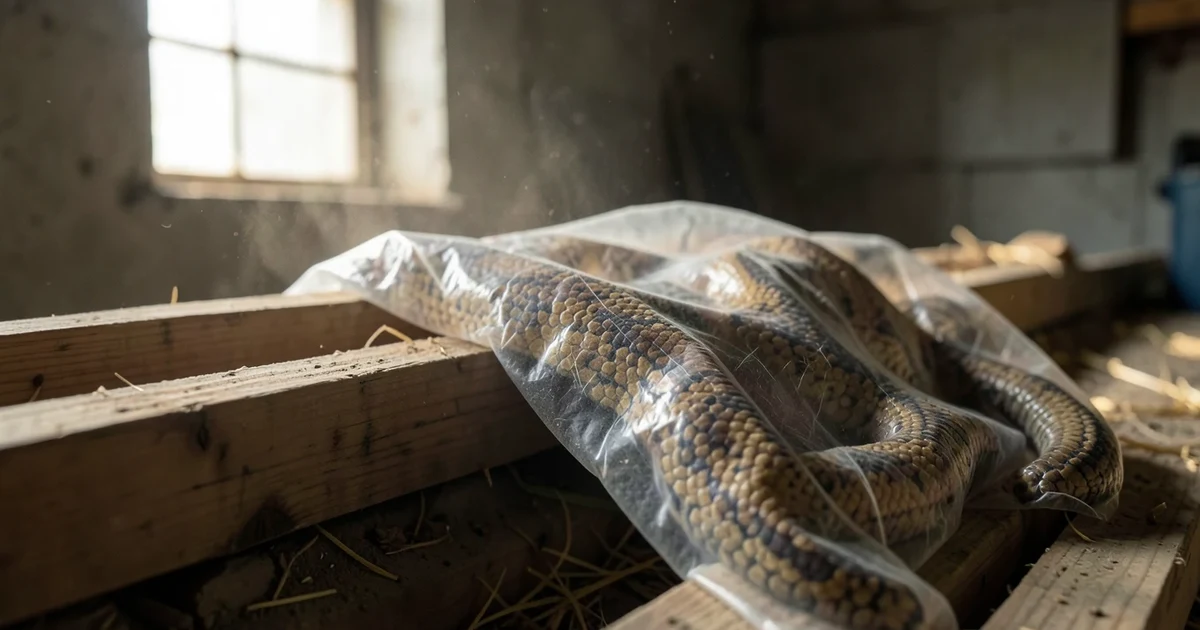
Identifying a Snake From Its Shed Skin
A shed skin carries scale counts, keel texture and the anal plate — enough to separate venomous from harmless in North America, and often to reach the species.
3 min read

Snake Season, Month by Month
Snake activity has two peaks, not one, and the autumn peak is the bigger of them. Here is the pattern by month, and how far it shifts with latitude.
3 min read
What a Baby Copperhead Actually Looks Like
Juvenile copperheads have a bright yellow-green tail tip that adults lose. It is the most reliable feature on a small snake, and almost nothing else shares it.
3 min read
How to Tell If a Snake Is Venomous — And Why the Usual Advice Is Wrong
Triangular heads and slit pupils are the standard advice and both are unreliable. Here is what actually distinguishes venomous US snakes, and why location beats appearance.
4 min read
Copperhead or Water Snake? The Band Shape Settles It
Copperhead bands are wide at the sides and narrow over the spine. Water snake bands are the reverse. That one difference resolves most sightings — here is how to read it.
3 min read
Cottonmouth or Water Snake? Watch How It Swims
Cottonmouths float high on the surface and gape to show a white mouth. Water snakes swim submerged and flee. Four tests you can run from the bank, plus why it matters.
3 min read
Coral Snake or Kingsnake? The Rhyme Works — With Two Caveats
Red touches yellow, kills a fellow — the rhyme is accurate in the United States and dangerously wrong elsewhere. Plus a second check that is easier to see: the snout.
3 min read
Rattlesnake or Bullsnake? Look at the Tail, Not the Noise
Bullsnakes hiss, flatten their heads and buzz their tails convincingly enough to be killed as rattlesnakes constantly. One glance at the tail settles it.
3 min read