

The Daddy Long-Legs Myth, and the Three Animals It Refers To
By IdentifyThese Editorial · · 3 min read · updated August 2026
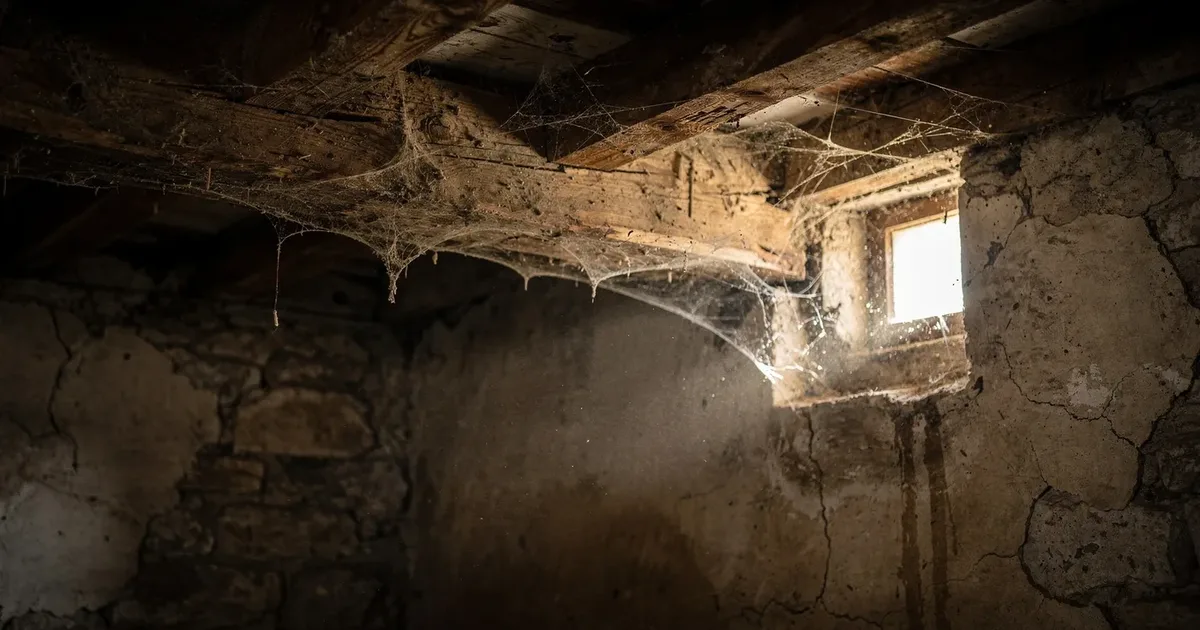
Three unrelated animals get called daddy long-legs, and one persistent piece of folklore gets attached to all of them: that they have the most powerful venom of any spider but fangs too short to break human skin.
It is wrong in both halves, for every animal it is applied to.
The three animals
Harvestmen (order Opiliones) are not spiders. One fused oval body with no waist, two eyes on a small turret, eight very long legs, no silk. Found on walls, tree trunks and under garden debris.
Cellar spiders (family Pholcidae) are true spiders. A small elongated body in two parts joined by a narrow waist, eight eyes, and a permanent untidy web in a ceiling corner. When disturbed they whirl in the web until they blur.
Crane flies (family Tipulidae) are insects. Two wings, six legs, and they bump into lampshades on summer evenings. They cannot bite anything and do not eat as adults.
The first check is easy: count the body segments. One means harvestman. Two means cellar spider. Wings mean crane fly.
Why the harvestman version is impossible
Harvestmen have no venom glands. None. They also have no fangs — instead of the piercing chelicerae a spider uses, they have small pincer-like structures for gripping and tearing food.
There is no venom to be potent and no delivery system to be too short. The claim is not exaggerated; it describes anatomy the animal does not possess.
Harvestmen are scavengers and small-prey hunters that break food into pieces and eat the fragments, which is why they need no venom in the first place.
Why the cellar spider version is also wrong
Cellar spiders are real spiders with real venom and real fangs, so the claim at least has something to attach to. It still fails.
The fangs are not too short. This was tested directly and filmed for television: a cellar spider bit human skin without difficulty. The reported sensation was a very mild, brief burning, gone in seconds.
The venom is not exceptional. Studies comparing pholcid venom with that of other spiders have found nothing unusual about its potency. It is adapted to small insects, like almost all spider venom.
So the animal that supposedly cannot bite you, can — and it does not matter when it does.
Where the story comes from
Nobody knows precisely, but the structure is familiar: a claim that is unfalsifiable in casual conversation. If the animal cannot bite you, no one can check. That makes it a stable piece of folklore, passed on because it is interesting and never tested.
It is probably helped along by genuine confusion between the three animals, and by the fact that all three look faintly alarming and are completely harmless.
Both are worth having around
Cellar spiders eat other spiders, including widows and recluses. They invade other spiders' webs, mimic the vibrations of trapped prey, and attack the resident. A ceiling corner colony of cellar spiders is doing genuine pest control, and clearing their webs removes a predator of the spiders you actually care about.
Harvestmen eat aphids, mites, small insects and decaying organic matter. They are a normal and beneficial part of a garden.
Neither will ever harm you, and one of them is physically incapable of trying.
Telling the three apart in one look
| Harvestman | Cellar spider | Crane fly | |
|---|---|---|---|
| Body segments | One, no waist | Two, narrow waist | Three, with wings |
| Legs | Eight | Eight | Six |
| Eyes | Two, on a turret | Eight | Compound |
| Web | None — no silk glands | Untidy, dusty, permanent | None |
| Where | Walls, tree trunks, under debris | Ceiling corners, cellars | Flying at lights |
If you can see a web, it is the cellar spider. If the body is a single oval with no waist, it is the harvestman. If it flew in through the window, it is a crane fly and not an arachnid at all.
Why the myth survives
The claim has a shape that makes it durable: it is interesting, it is repeated by people who heard it from someone credible, and — crucially — it is constructed so that no ordinary person can test it. If the animal supposedly cannot bite you, there is nothing to check.
That is worth noticing as a general habit. A claim that explains why it cannot be verified deserves more scepticism than one that simply might be wrong.
Species referenced
If you think you were bitten
- Most suspected spider bites are not spider bites. Studies of patients presenting with a “spider bite” repeatedly find that the large majority are bacterial skin infections — frequently MRSA — which need antibiotics rather than reassurance. A spreading, painful, pus-filled sore is far more likely to be an infection than a spider.
- Wash it, ice it, and watch it. Clean the area with soap and water, apply a cold pack, and keep an eye on it.
- Get medical care if the wound spreads or darkens, if you develop cramping, sweating, fever or severe abdominal pain, or if you are confident it was a widow or a recluse.
- Bring the spider only if it is already dead and to hand. Do not go looking for it. Doctors treat symptoms, not species.
In the US, the Poison Help line is 1-800-222-1222. This site is a reference, not medical advice.
Keep reading
- How Long Do Brown Recluse Bite Symptoms Take?Most bites cause a red mark and nothing more. The minority that develop a lesion follow a recognisable timeline, and the first few hours look unremarkable.
- How to Know If It Really Is a Brown RecluseSix eyes in three pairs, uniform tan legs, and no pattern anywhere. The violin is the feature everyone checks first and the least dependable one on the animal.
- Spider Bite or Skin Infection? How Doctors Actually TellMost wounds presented as spider bites are not spider bites. What separates the two, why the distinction matters urgently, and the questions a clinician will ask.