

What to Put in a Bird Feeder
By IdentifyThese Editorial · Reviewed · 3 min read
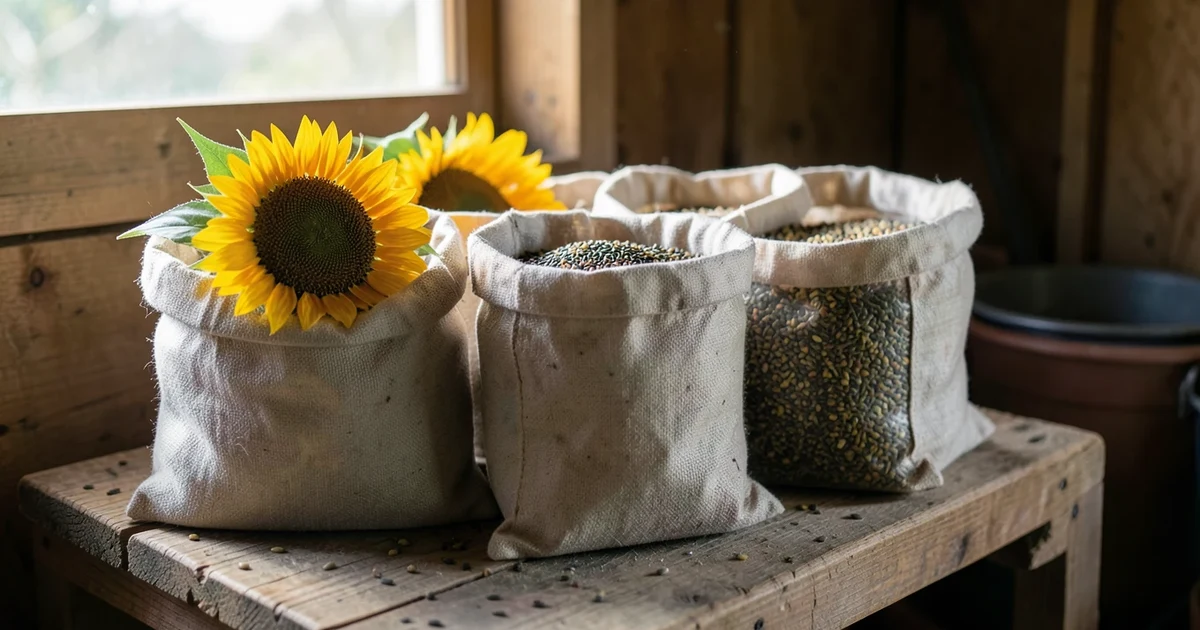
One seed does most of the work, and most mixed bags are worse value than they look.
Black oil sunflower
If you buy one thing, buy this. Thin shell, high fat, small enough for chickadees and rich enough for cardinals. It is taken by more feeder species than any other single food.
Striped sunflower is a thicker shell and suits larger, stronger-billed birds — cardinals, jays, grosbeaks — while excluding house sparrows, which is sometimes the point.
Hulled sunflower costs more per kilo and is often cheaper in practice: there is no shell to discard, nothing accumulates below the feeder, and none of what you buy is thrown away.
What each seed actually brings
| Seed | Draws | Notes |
|---|---|---|
| Black oil sunflower | Nearly everything | The default |
| Hulled sunflower | Everything, no mess | No shells under the feeder |
| Safflower | Cardinals, chickadees, finches | Squirrels and house sparrows mostly refuse it |
| Nyjer | Goldfinches, siskins, redpolls | Needs a mesh feeder; goes rancid fast |
| Peanuts | Titmice, jays, woodpeckers, nuthatches | Whole in shell, or in a mesh feeder |
| Suet | Woodpeckers, nuthatches, wrens | Best in cold weather |
| White proso millet | Juncos, sparrows, doves | Scatter on the ground |
| Cracked corn | Doves, jays, ground feeders | Draws deer and rodents too |
| Red milo | Almost nothing | The main filler in cheap mixes |
Safflower is the useful trick. Cardinals take it readily, grey squirrels and house sparrows mostly do not, and it solves two problems without a special feeder.
Why cheap mix is expensive
A cheap bag is mostly red milo, wheat and cracked corn. Most feeder birds will not eat milo or wheat at all — they flick it aside looking for the sunflower, and it accumulates below the feeder, where it rots and draws rodents.
You pay less per kilo and discard a large fraction of it. A bag of straight black oil sunflower costs more and delivers more food.
Matching the feeder
- Tube feeder — sunflower or mixed. Short perches exclude grackles and starlings.
- Hopper — general purpose, holds a lot, suits cardinals and jays.
- Platform — everything, including ground feeders. Needs a drainage mesh and regular cleaning.
- Nyjer mesh or sock — goldfinches only, and they will feed upside down.
- Suet cage — woodpeckers. An upside-down suet feeder excludes starlings, which cannot feed hanging.
- Ground or low tray — juncos, doves, sparrows, towhees. Many species will not use a hanging feeder at all.
The part that matters more than the seed
Clean the feeder. Every two weeks in warm weather, monthly otherwise. Hot soapy water, a dilute bleach rinse, and dry completely before refilling.
Dirty feeders spread salmonellosis, trichomonosis and house finch eye disease, and concentrating birds at a food source is exactly what lets those spread. If you see a bird with crusted or swollen eyes, or one that sits fluffed and unafraid, take the feeder down for two weeks and clean everything.
Also:
- Rake up the spill. It rots, molds and draws rats.
- Move the feeder occasionally so droppings do not build up in one spot.
- Store seed dry and sealed. Damp seed grows aspergillus, which kills birds.
Water
More useful than any seed, and almost nobody provides it. A shallow dish, no more than 5 cm deep, with a rough surface for grip, refreshed every couple of days.
In winter a heated bath brings birds that will never touch a feeder — thrushes, waxwings, warblers.
What not to put out
- Bread. Fills birds without feeding them, and causes wing deformity in waterfowl.
- Salted or roasted nuts.
- Desiccated coconut, which swells.
- Milk. Birds cannot digest lactose.
- Anything moldy. Aspergillus is fatal and moldy seed is a common cause of feeder die-offs.
Where to put it
Either within a metre of a window or more than ten metres from one. The middle distance is where birds build up enough speed to injure themselves on the glass, and window strikes kill far more birds than people realise — what to do when one hits covers both the first aid and the fix.
Species referenced
Keep reading
- The Small Brown Bird at My FeederFour species account for nearly every one. Look at the breast — plain, blurry or heavily streaked with a central spot — and the answer follows.
- Where Did My Goldfinches Go?They are still there. American goldfinches moult out of the yellow into a drab olive-buff and keep visiting the feeder unrecognised.
- A Bird Hit My Window. What Now?Most stunned birds recover if left alone in a dark, quiet box. And the fix for the window is on the outside of the glass, which is why most products fail.