

Black Rings in the Toilet Tank and Bowl
By IdentifyThese Editorial · · 4 min read
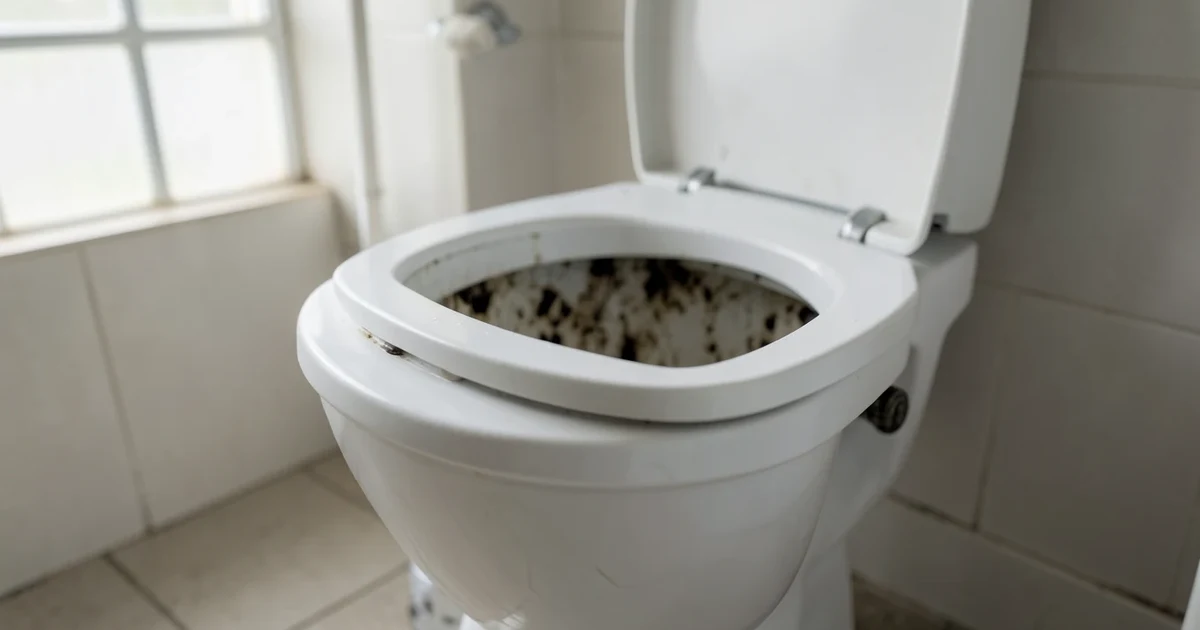
Three different things produce dark rings in a toilet, and only one of them is mold. Which matters, because they come back for different reasons and stop for different reasons.
Pink or orange slime — bacteria
Serratia marcescens. Airborne, common, and it feeds on the phosphorus and fatty deposits in soap residue and shampoo.
It appears at the waterline, around drains, in pet bowls, in shower corners and in toilets that are not flushed often — a guest bathroom is the classic case. Slimy rather than fuzzy.
It is a bacterium, not a mold. It is largely harmless to healthy people and is an opportunistic pathogen in hospital settings and for the immunocompromised.
Bleach kills it. It returns, because the spores are in the air everywhere and the food source is whatever washes down the drain. Frequency of cleaning is what controls it, not the strength of the cleaner.
Black or brown staining — usually minerals
If the black is on the porcelain rather than growing on it, and it feels like a deposit rather than a film, look at the water supply.
Manganese is the commonest cause. Present in many groundwater supplies below any level that affects health, it oxidises and deposits as a black-brown film on porcelain, in the cistern and inside the tank fittings.
Iron produces orange-brown staining, sometimes with black where it has oxidised further.
Tells that it is mineral:
- It appears at the waterline and along water paths rather than in the damp air above.
- It affects every toilet, tap and sink in the house rather than one fixture.
- It is on the inside of the tank and on the fill valve, where there is no airborne exposure.
- It comes back at a very steady rate.
Bleach does little. An acidic cleaner — descaler, or citric acid — removes it, and the permanent answer is treating the water supply.
Actual mold
Genuine mold in a toilet is usually above the waterline, on the underside of the seat, on the rim, or in the cistern lid gap. It is fuzzy rather than slimy, and it responds to humidity in the room rather than to the water in the pan.
If it is mold, the bathroom's ventilation is the cause and the toilet is incidental — which is the same conclusion most bathroom mold reaches.
Telling them apart
| Serratia | Mineral | Mold | |
|---|---|---|---|
| Colour | Pink, orange, occasionally red | Black, brown, orange | Black, green, grey |
| Texture | Slimy | Hard or powdery deposit | Fuzzy |
| Where | Waterline, drains | Waterline, inside tank, all fixtures | Above waterline, seat, rim |
| Wipes off | Yes, easily | Resists — needs acid | Yes, leaves a stain |
| Removed by | Bleach or any disinfectant | Descaler, citric acid | Detergent and scrubbing |
| Returns because | Airborne, feeds on soap residue | The water supply | Humidity |
Wiping a sample onto white tissue is a quick discriminator: biofilm smears, mineral deposit resists, mold smears and leaves a coloured mark.
The cistern
Worth opening the lid, because it is the part nobody looks at and it explains a lot.
A dark coating on the tank walls and fittings, with clean water above it, is a mineral or biofilm issue. Rubber components degrading — flapper valves in particular — shed black particles that then appear in the bowl and get reported as mold.
If the black in the bowl appears immediately after a flush and settles, check the flapper. That is a five-pound part and a common cause.
Fixing each
Serratia — clean weekly with any disinfectant, keep soap residue down, run water in unused fixtures, and improve ventilation. It will recur; the interval is what you control.
Minerals — descale with an acidic cleaner. For a whole-house fix, a water test and a filtration or oxidising system. Softeners do not remove manganese; that needs a specific filter.
Mold — the room's humidity is the problem. An extractor fan that actually runs long enough, run during and for twenty minutes after showering, does more than any cleaning product. Removing mold covers why bleach is usually the wrong choice on porous surfaces, and what works instead.
The general point
Reaching for bleach before identifying what is growing is the most common mistake in household mold, and it produces exactly this pattern: the stain lifts, everyone concludes it was mold, and it comes back on schedule.
Is it even mold sets out the four things most often mistaken for it, and a toilet manages to host three of them at once.
Types referenced
The species matters less than you think
- Public health guidance is to remove all indoor mold regardless of type. The CDC and EPA do not recommend routine species testing for ordinary households, because the response does not change: find the water, stop it, remove the growth.
- “Toxic black mold” is a marketing phrase, not a category. Stachybotrys is real and does need soaked material to grow, so finding it tells you something useful about your building. But the health effects that are well established — allergy, asthma aggravation, irritation — are not specific to it.
- Mold without water does not persist. Cleaning growth while leaving the moisture source is why it comes back. The leak, the condensation or the ventilation is the actual problem.
Call a professional for areas larger than about 10 square feet, for anything in HVAC ductwork, after sewage or flood water, or if anyone in the household is immunocompromised or has a lung condition.
Keep reading
- Is It Even Mold? Four Things That Aren'tWhite crust on basement walls, pink slime in the shower, black lines on the ceiling — three of the most common mold reports are not mold. Each has a ten-second test.
- Removing Mold: What Works, and Why Bleach Usually Isn't ItCleaning the growth without fixing the moisture is why mold comes back. What to use on which surface, what to throw away, and where the DIY limit sits.
- Black Mold Around Windows: It Is CondensationMold on a window reveal is the coldest surface in the room collecting the room's moisture. Cleaning it treats the symptom; three changes treat the cause.