

Are Mold Testing Kits Worth It? Mostly Not
By IdentifyThese Editorial · · 3 min read
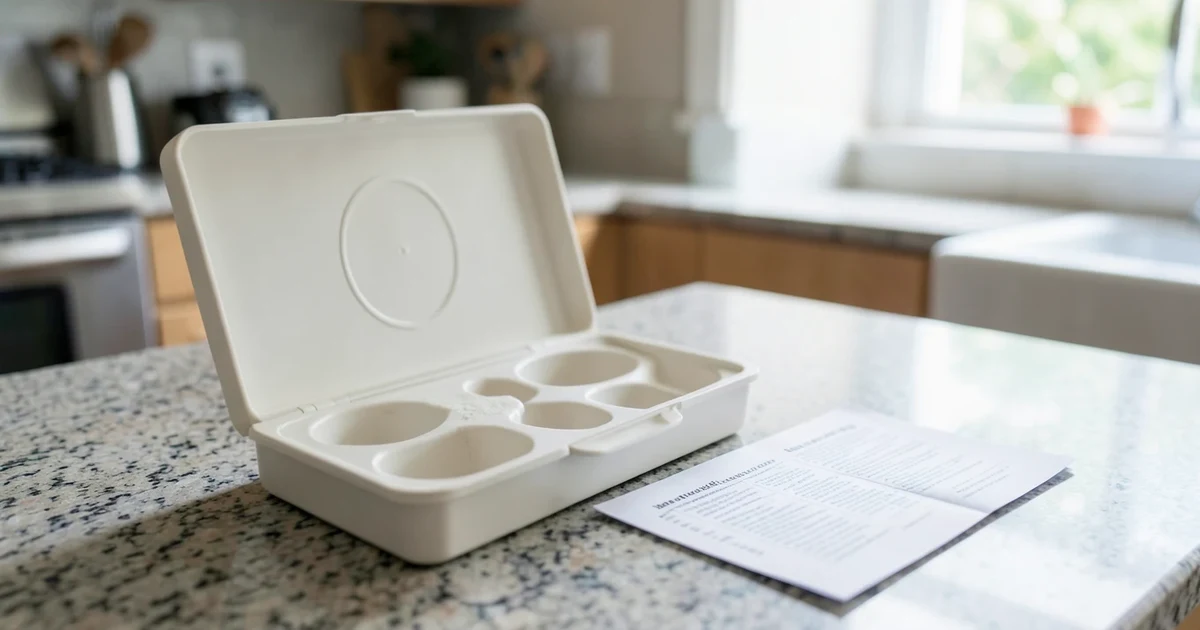
Leave a petri dish open in any room in any building anywhere and something will grow on it.
Outdoor air contains thousands of mold spores per cubic metre as a normal background. They come in through open windows, on clothes, on pets. A settle plate samples that background and then feeds it in ideal conditions.
So the result is not evidence of a problem. It is evidence that you are on Earth.
What the common kits do
Settle plates — an agar dish left open for an hour, then sealed and incubated. It tells you that airborne spores exist and grew. It does not measure concentration in any calibrated way, does not compare with outdoor levels, and does not indicate an active growth site.
Tape lifts and swabs — pressed onto visible growth and sent to a lab. These are more meaningful, because you are sampling something specific. But you already knew there was mold, since you could see it, and knowing which genus it is rarely changes what you do.
Air sampling cassettes — pumped volumetric samples analysed by a lab. This is the professional method, and it is only interpretable against a simultaneous outdoor control sample, which most DIY kits do not include. Without that control the numbers cannot be read.
ERMI — a dust sample assessed by DNA analysis against a score. Developed by the EPA as a research tool, and the EPA itself states it is not validated for assessing individual buildings. It is sold commercially anyway.
Why species identification changes little
The remediation is the same regardless.
Whether it is Cladosporium, Aspergillus, Penicillium or Stachybotrys, the response is: find the water, stop the water, remove the affected material, dry it thoroughly. Nobody treats one mold differently from another in a building.
The one thing people want from a test is to know whether they have "toxic black mold". That framing does not survive contact with the evidence, and what the evidence actually says goes through it — the short version is that species is a poor predictor of health effects and the total amount of growth matters more.
What to do instead
Look and smell. Visible growth needs no test. A persistent musty smell means growth somewhere, and locating it is the task.
Measure moisture. This is the actual diagnostic.
- A hygrometer — under twenty pounds — tells you whether room humidity is above 60%, which is where the trouble starts.
- A moisture meter finds damp inside walls and floors.
- Thermal imaging finds cold spots and hidden leaks. Many surveyors include it.
Moisture is the variable you control and the one that decides whether mold grows. Spores are constant; water is not.
Look where water goes. Under sinks, behind washing machines, around windows, at wall-floor junctions, in the loft below any roof penetration, at the base of exterior walls.
When testing is worth it
- You can smell it and cannot find it. Professional investigation, including sampling, can localise hidden growth — though moisture mapping usually finds it first.
- A legal or insurance dispute, where documented evidence is needed.
- A medically vulnerable occupant and a clinician has specifically asked for it.
- After remediation, as a clearance check by an independent assessor — not by the company that did the work.
In all four cases the useful version is a professional assessment with outdoor controls, not a supermarket kit.
The conflict worth knowing about
Many free or cheap mold inspections are offered by companies that also sell remediation. The incentive is obvious, and the industry has no shortage of assessments that find an urgent problem requiring an expensive response.
If you are getting a professional opinion, get it from someone who does not do the work.
The honest summary
If you can see mold, you do not need a test — you need to find the water and remove the growth, as removing mold sets out.
If you cannot see mold and have no smell and no damp, a positive plate is telling you what is already true of every building.
And if what you can see turns out not to be mold at all — efflorescence, soot, mineral staining, bacterial film — no test was going to help either. That is where is it even mold starts, and it is the cheapest step of the lot.
Types referenced
The species matters less than you think
- Public health guidance is to remove all indoor mold regardless of type. The CDC and EPA do not recommend routine species testing for ordinary households, because the response does not change: find the water, stop it, remove the growth.
- “Toxic black mold” is a marketing phrase, not a category. Stachybotrys is real and does need soaked material to grow, so finding it tells you something useful about your building. But the health effects that are well established — allergy, asthma aggravation, irritation — are not specific to it.
- Mold without water does not persist. Cleaning growth while leaving the moisture source is why it comes back. The leak, the condensation or the ventilation is the actual problem.
Call a professional for areas larger than about 10 square feet, for anything in HVAC ductwork, after sewage or flood water, or if anyone in the household is immunocompromised or has a lung condition.
Keep reading
- Toxic Black Mold: What the Evidence Actually SaysStachybotrys is real, produces mycotoxins, and needs soaked material to grow. What it is not is a separate category of danger requiring a different response.
- Is It Even Mold? Four Things That Aren'tWhite crust on basement walls, pink slime in the shower, black lines on the ceiling — three of the most common mold reports are not mold. Each has a ten-second test.
- Mold in the Attic: Almost Always VentilationAttic mold is warm moist air from the house meeting cold roof sheathing. The pattern of growth points at exactly where it is getting in.