
Why Are My Plant's Leaves Turning Yellow? Start With Where
By IdentifyThese Editorial · · 3 min read · updated August 2026
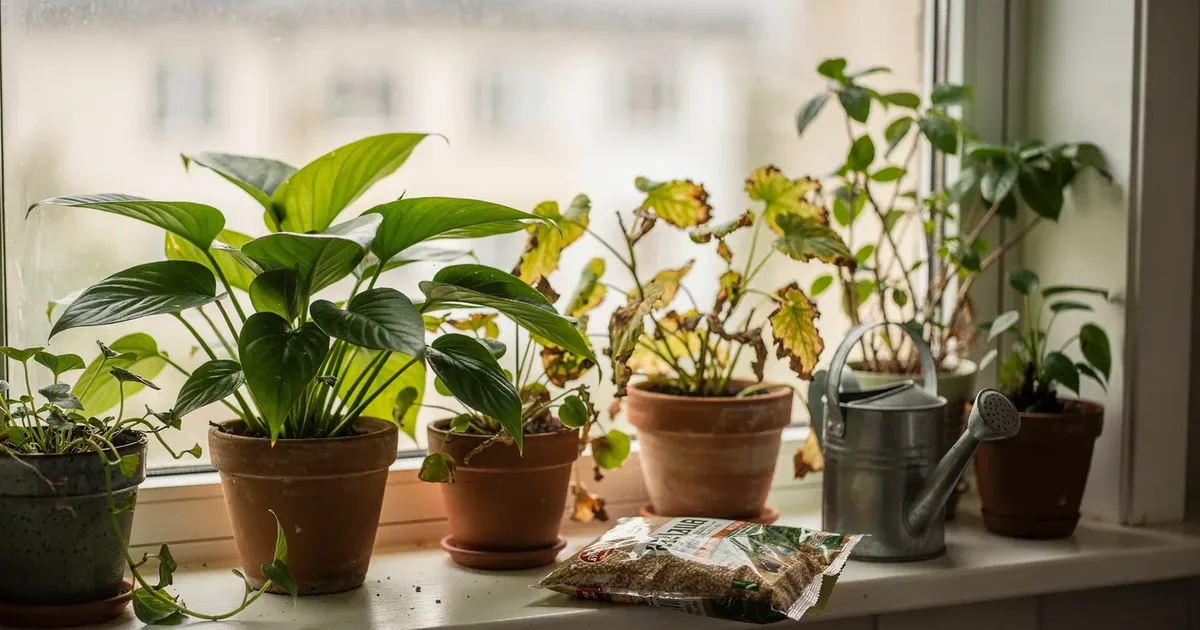
Yellow leaves are the most common plant complaint there is, and on their own they mean almost nothing — a plant has only a few ways of looking unwell, and yellowing is the one it reaches for most.
What narrows it down is not the colour. It is the position.
Step one: which leaves went yellow?
This single question splits the possibilities almost in half, and the reason is worth understanding.
Some nutrients move around inside a plant and some do not. When a plant runs short of a mobile nutrient — nitrogen, magnesium, potassium — it dismantles its oldest leaves and ships the contents to the new growth, because the new growth is the future. So a shortage shows at the bottom first.
When it runs short of an immobile nutrient — iron, calcium, sulphur — it cannot do that. The nutrient is locked into leaves already built, so only the new growth goes short.
That gives you a rule:
- Oldest, lowest leaves yellow first → nitrogen, magnesium, overwatering, or a soil-borne disease splashing up from below.
- Newest, topmost leaves yellow first → iron, sap-sucking pests, or root damage.
Step two: did the veins stay green?
Look closely at a yellow leaf.
Whole leaf uniformly yellow, veins included, starting low down. This is classic nitrogen shortage. The plant will also be growing slowly with thin stems. A balanced feed fixes it within a week or two.
Yellow between the veins with a clear green net still showing, on the newest leaves. This is iron chlorosis, and it is usually a soil pH problem rather than an absence of iron — alkaline soil locks iron up. Common near concrete paths and foundations. Chelated iron helps in the short term; correcting pH helps permanently.
Yellow between the veins but on the older lower leaves. Magnesium rather than iron, since magnesium is mobile and iron is not. Epsom salts genuinely do help here, which is one of the few cases where that folk remedy is right.
Step three: check the soil and the leaf underside
Wet soil, soft yellow leaves that drop easily. Overwatering. This is the single most common cause of yellow leaves on houseplants, and it is worth checking before anything else because it costs nothing.
Yellow patches with straight, angular edges, and grey or purple fuzz on the underside. Downy mildew. Turn the leaf over — the fuzz is definitive.
Fine pale stippling across the leaf, going bronze, maybe fine webbing. Spider mites. Tap the leaf over white paper and watch for specks that move.
Yellow leaves with brown spots that have concentric rings, starting at the bottom of a tomato. Early blight, splashing up from the soil.
One side of the plant yellow and wilting while the rest looks fine. A wilt disease. Cut the stem lengthwise near the base and look for brown staining in the ring under the skin.
Step four: consider that nothing is wrong
Plants shed old leaves. It is normal, and it is not a problem to solve.
- A houseplant dropping one lower leaf occasionally is doing routine maintenance.
- A plant that has just been moved — home from a shop, or to a new room — commonly drops several leaves while it adjusts to different light. Wait a few weeks before intervening.
- Seasonal change. Reduced winter light means a plant supports fewer leaves. Some yellowing and dropping in autumn is expected.
- The oldest leaves at the base of a tomato will yellow and die as the season goes on regardless of what you do.
The signal that matters is not one yellow leaf. It is several leaves yellowing in a pattern, or new growth being affected.
The quick version
| What you see | Most likely cause |
|---|---|
| Whole leaf yellow, oldest first | Nitrogen shortage |
| Yellow between green veins, newest first | Iron chlorosis |
| Yellow between veins, oldest first | Magnesium shortage |
| Soft yellow leaves, wet soil | Overwatering |
| Crisp yellow leaves, dry soil | Underwatering |
| Angular yellow patches, fuzz underneath | Downy mildew |
| Fine stippling, bronzing, webbing | Spider mites |
| One side yellow and wilting | Fusarium or verticillium wilt |
Work down from the top of that list. The first two rows account for a large share of all cases, and both are cheap to fix.
Problems referenced
Check these two things first
- Push a finger into the soil, two knuckles deep. Wet soil plus a wilting plant means too much water, not too little — and it is the commonest reason a plant is dying. Dry soil plus crisp leaves means the opposite. The leaves look nearly identical either way, so the soil is what tells you.
- Turn a damaged leaf over. Half of all diagnoses live on the underside: fuzz means downy mildew, fine webbing means spider mites, clusters of insects mean aphids. Nothing on the top of a leaf is as informative.
Most garden problems are cosmetic and resolve without treatment. Reach for a spray last, not first.
Keep reading
- Overwatering or Underwatering? The Leaves Won't Tell YouBoth make a plant droop and yellow, and the treatments are opposites. The soil, the leaf texture and the recovery time separate them in under a minute.
- Sticky Leaves: What Honeydew Means and Who Is Making ItSticky residue is insect excretion, and it always comes from above. Four sap-feeders produce it, and each leaves a different sign on the plant.
- Leaves Curling Up or Curling Down? The Direction Tells You WhyCurling upward and inward is usually water stress or heat. Curling downward and outward points at overwatering, root damage or herbicide. Direction narrows it fast.