
Overwatering or Underwatering? The Leaves Won't Tell You
By IdentifyThese Editorial · Reviewed · 3 min read
This is the most useful distinction in plant care, and the reason it is so often got wrong is that both problems produce the same picture above ground: a drooping, yellowing, sad-looking plant.
That happens because an overwatered plant is also, functionally, a thirsty one. Waterlogged soil has no air in it, roots suffocate and die, and a plant with dead roots cannot take up water no matter how much is around them. So it wilts — and the owner, reasonably, waters it again.
The test: feel the soil, not the leaves
Push a finger into the soil to the second knuckle.
| Overwatered | Underwatered | |
|---|---|---|
| Soil | Wet, sometimes days after watering | Dry, often shrunk from the pot edge |
| Leaf texture | Soft, limp, floppy | Dry, crisp, papery |
| Yellowing | Soft yellow leaves that drop while still yellow | Crisp yellowing, usually browning first |
| Leaf edges | Soft brown patches | Brittle brown edges and tips |
| Pot weight | Heavy | Noticeably light |
| Smell | Sometimes sour or swampy | Neutral |
| Recovery after watering | Worse | Visible within hours |
The last row is the one that closes the case. Water a thirsty plant thoroughly and it will perk up within a few hours. An overwatered plant will not improve, and giving it more water makes it worse.
Why overwatering is the bigger killer
Overwatering kills more houseplants than every pest and disease combined, and it is not really about how often you water. It is about how long the soil stays wet.
The same weekly watering can be perfect for a plant in a terracotta pot on a sunny sill and fatal for one in a plastic pot with no drainage hole in a dark corner. The variables that actually matter:
- Drainage holes. A pot without them cannot be watered safely, and a layer of gravel in the bottom does not fix this. It raises the waterlogged zone rather than removing it.
- Pot size. An oversized pot holds a large volume of wet soil that the small root ball cannot drink. Potting up two sizes at once is a common way to kill a healthy plant.
- Light and temperature. A plant in low light and cool air uses far less water. The same routine that worked in July drowns a plant in January.
- Standing water. A saucer left full keeps the bottom inch of the pot permanently saturated.
When it has gone past overwatering
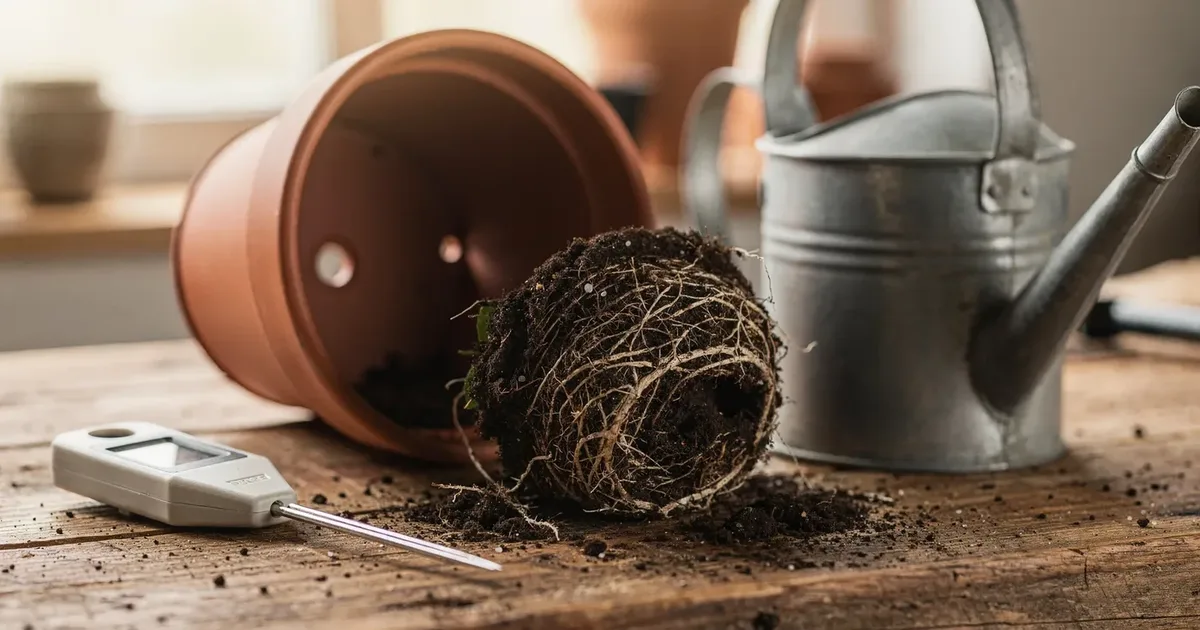
If leaves are yellowing and dropping and the soil is staying wet, take the plant out of the pot and look at the roots. Almost nobody does this, and it is the only way to know.
- Healthy roots are firm and pale — white, cream or tan — and snap rather than squash.
- Rotted roots are brown or black, soft, and the outer sheath slides off when pulled, leaving a bare thread. The smell is sour.
If most roots are still firm, the plant will recover — see root rot for what to cut away: cut away the soft ones, repot into fresh free-draining mix in a pot no bigger than it needs, and water sparingly until new growth appears.
If nearly all the roots are mush, it is usually finished. Taking healthy cuttings from the top is a better use of your time than nursing the root ball.
What about outdoors?
The same logic applies, with two additions.
Wilting in afternoon heat is normal. Squash, hydrangeas and cucumbers routinely flop in the middle of a hot day and recover by evening — that is a heat response, not a water shortage, and watering in reaction to it is how beds get overwatered. Judge by how the plant looks in the morning.
Water deeply and less often. A long soak that reaches down through the root zone encourages deep rooting. Frequent light sprinkles keep roots shallow and make the plant more vulnerable in the next dry spell, not less.
The habit worth building
Stop watering on a schedule. Check first, every time — a finger in the soil, or the weight of the pot in your hand. It takes two seconds and it removes the most common way plants die.
Problems referenced
Check these two things first
- Push a finger into the soil, two knuckles deep. Wet soil plus a wilting plant means too much water, not too little — and it is the commonest reason a plant is dying. Dry soil plus crisp leaves means the opposite. The leaves look nearly identical either way, so the soil is what tells you.
- Turn a damaged leaf over. Half of all diagnoses live on the underside: fuzz means downy mildew, fine webbing means spider mites, clusters of insects mean aphids. Nothing on the top of a leaf is as informative.
Most garden problems are cosmetic and resolve without treatment. Reach for a spray last, not first.
Keep reading
- Which Tomato Leaf Spot Is It? Rings, Dots and GreaseFour diseases spot tomato leaves and they need different responses. Concentric rings, tiny black dots and a greasy texture separate them — one of them needs acting on today.
- Black Spots and Black Leaves: Six Different ProblemsBlack on a leaf can be fungal, bacterial, an insect by-product, cold damage or sunburn. The halo, the shape and whether it rubs off separate them.
- Why Are My Plant's Leaves Turning Yellow? Start With WhereYellow leaves have at least seven common causes. Which leaves yellowed — oldest or newest — and whether the veins stayed green narrows it to one or two immediately.