

There's a Snake in My Yard. Now What?
By IdentifyThese Editorial · · 4 min read · updated August 2026
The immediate question is usually the wrong one. People ask how to get rid of the snake, when the useful question is whether anything needs to be done at all.
First: does it actually need to go?
In the overwhelming majority of cases, no.
Most snakes found in yards are harmless, transient, and doing something useful. A ratsnake in the barn is why you do not have a rat problem. A brownsnake under the paving is eating slugs. A kingsnake in the woodpile eats other snakes, including venomous ones.
Snakes are also usually just passing through. A snake seen once is often a snake in transit rather than a resident.
If you can work out what it is and it is harmless, the correct action is generally nothing.
If it is venomous, or you cannot tell
Keep it simple:
- Bring pets and children indoors. Dogs are bitten far more often than people, usually on the face while investigating.
- Keep everyone at a distance — twice the snake's body length is comfortable.
- Watch from a window if you can, so you know whether it leaves.
- Call a professional if it is somewhere it cannot be left: a wildlife removal service, animal control, or in many regions a volunteer from a local herpetological society who will relocate it free.
Do not attempt removal yourself. This is not caution for its own sake — a large share of venomous snakebites in the United States happen to people who were handling, moving or trying to kill a snake. The removal attempt is the dangerous part, not the snake.
Getting a snake out of a garage or basement
Snakes come indoors following rodents or looking for cool shelter, and they usually want to leave.
- Open the door to the outside and close interior doors.
- Clear a straight path along a wall — snakes travel along edges, not across open floor.
- Turn the lights off and leave the room for a few hours.
- If it stays put, place a large bin or laundry basket over it upside down and weight the top, then call for removal. This contains it safely without anyone reaching for it.
A trick worth knowing: if a snake is hiding somewhere inaccessible, lay a damp towel over a heating pad in a dark corner overnight. Snakes reliably move to it, and the towel can then be lifted with the snake inside by someone qualified.
What does not work
Mothballs. Naphthalene has been tested repeatedly as a snake repellent and does not work. It is toxic to children, pets and wildlife, and applying it outdoors is against the label — and therefore illegal — in most of the United States.
Sulfur powder. Same story. Widely sold, repeatedly tested, does not deter snakes.
Ultrasonic devices. Snakes have no external ears and are largely insensitive to airborne sound. These do nothing.
Commercial granular repellents. Independent testing has generally found no meaningful effect.
What does work
Snakes go where there is food and cover. Remove those and they stop coming.
Deal with rodents. This is the single biggest factor. A yard with a rodent population attracts snakes; one without does not.
Cut the grass and keep it short. Snakes avoid crossing open, exposed ground.
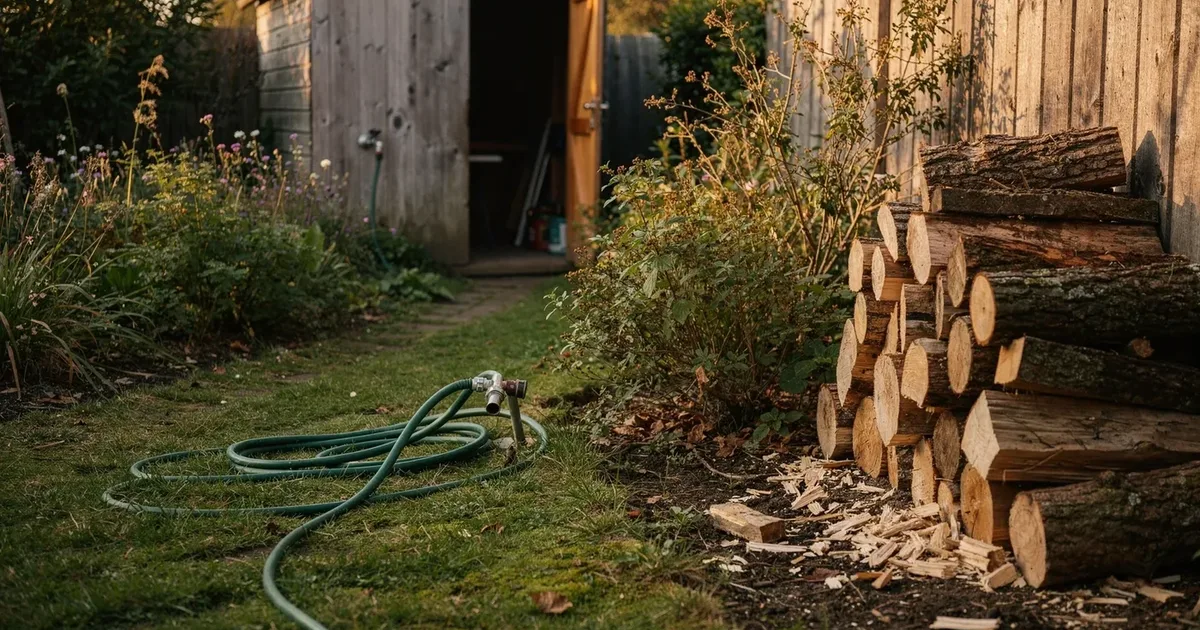
Clear the cover. Woodpiles, brush piles, sheet metal, old lumber, thick ground-cover plantings and rock piles are exactly what a snake is looking for. Stack firewood off the ground and away from the house.
Seal the gaps. Anything wider than a quarter of an inch can admit a snake. Check under doors, around pipe entries, dryer vents, and the gap where siding meets the foundation.
Move bird feeders. Spilled seed feeds rodents, and rodents bring snakes. This surprises people more than anything else on this list.
Fencing, if you must. Snake-proof fencing works but has to be done properly: quarter-inch mesh, buried several inches, at least two to three feet high, angled outward at the top, with no vegetation touching it. It is expensive and rarely justified except around a specific area such as a play space.
Snakes in the pool
Common in the southeast and usually accidental — the snake fell in and cannot climb the smooth wall.
Use a pool skimmer on a long pole to lift it out and set it on the grass away from the house, keeping the net at arm's length. If you cannot identify it, or it is clearly a pit viper, call for removal instead. Do not swim while it is in there.
A note on the law
Several snake species are protected. Timber rattlesnakes are endangered or threatened in a number of northeastern states, eastern massasaugas are federally threatened, and the eastern indigo snake is protected under the Endangered Species Act. Killing one can carry a substantial fine.
More generally, many states protect non-game wildlife including snakes. Check your state wildlife agency before assuming that killing a snake on your own property is legal — in a fair number of places, it is not.
Species referenced
Before anything else
- Back away and leave it alone. A snake that can see you leaving has no reason to bite. Most bites in the United States happen to people who picked up, cornered, or tried to kill a snake.
- Never handle a snake to identify it. Every identification on this site can be made from a photo or from several feet away.
- If someone is bitten, call emergency services now. Keep the limb still and below the heart, remove rings and watches, and go to hospital. Do not cut, suck, apply ice, or use a tourniquet — all of these make outcomes worse.
- Do not try to catch the snake for identification. A photo from a distance is enough, and hospitals treat symptoms rather than species.
In the US, the Poison Help line is 1-800-222-1222. This site is a reference, not medical advice.
Keep reading
- Do Snakes Come Back to the Same Yard?Snakes return to places that reliably offer cover, warmth and prey. Which means the question worth asking is what your yard is providing, not how to repel them.
- What a Baby Copperhead Actually Looks LikeJuvenile copperheads have a bright yellow-green tail tip that adults lose. It is the most reliable feature on a small snake, and almost nothing else shares it.
- How to Tell If a Snake Is Venomous — And Why the Usual Advice Is WrongTriangular heads and slit pupils are the standard advice and both are unreliable. Here is what actually distinguishes venomous US snakes, and why location beats appearance.