

Getting a Spider Out of the House Without Killing It
By IdentifyThese Editorial · · 4 min read
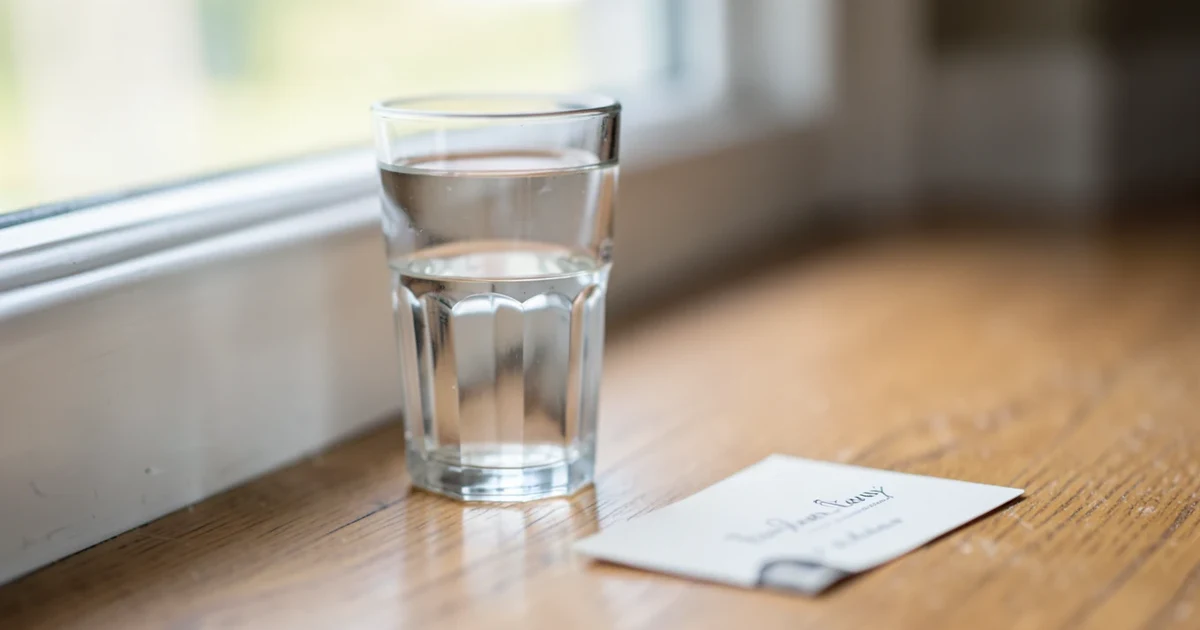
The glass and card method works for almost everything, and the failures are usually the same three mistakes.
The method
- A wide glass, wider than the spider's leg span. A pint glass is better than a tumbler for a large one.
- Stiff card. A postcard, a coaster, a cereal box panel. Not paper — paper flexes and legs get through the gap.
- Approach slowly and place the glass over the spider in one movement. Fast movement makes it run; slow movement often does not register as a threat.
- Slide the card underneath, working from one edge. The spider will usually walk up the side of the glass, which is what you want.
- Hold the card flat against the rim and carry it, glass upright, keeping the card in contact.
- Release by laying the glass on its side and letting it walk out.
The three mistakes: using paper, letting the card lose contact with the rim while walking, and approaching quickly.
For a large one
If a glass is not appealing:
- A long-handled spider catcher — soft bristles that close around the animal without injuring it. They work well, they cost little, and they solve the problem of not wanting to be near it.
- A jar with a lid, for something you want to keep contained longer.
- A sheet of paper on the floor for a ground-runner like a wolf spider — many will simply walk onto it.
Where to put it
This is the part that gets done wrong with good intentions.
House spiders — Tegenaria, Eratigena, Parasteatoda — are synanthropic. In much of their range they live indoors, and an individual put out in a garden in October frequently does not survive: it has no web, no established retreat, and no adaptation to overnight cold.
Put it in a garage, shed, outbuilding or cellar. It gets out of your living room, it survives, and it eats flies somewhere you do not mind.
Genuinely outdoor spiders — orb weavers, wolf spiders, anything that came in by accident — can go straight outside. They belong there.
Any distance is enough. Spiders do not navigate back to a room. Ten metres is not different from ten centimetres in terms of the outcome.
The ones to be careful with
Two groups warrant a container rather than a hand, and both are identifiable before you get close.
Widows — a glossy black spherical abdomen, hanging in an untidy tangle web in a dark void, with a red or orange marking on the underside. Use a container with a lid, or leave it to someone else. Black widow or common house spider sets out the separation, and the shape of the abdomen is the fastest part of it.
Recluses — small, smooth, uniformly tan, with six eyes in three pairs and no pattern on the legs. Absent from most of North America, so the first check is the map rather than the spider: do brown recluses live where you do.
Everything else is a glass-and-card animal.
Why not just kill it
Beyond the obvious: spiders are the principal predator of the insects that also come indoors. A house with spiders has fewer flies, moths, silverfish and mosquitoes, and removing them does not stop more arriving from the same places.
There is also no such thing as an empty house. Removing the ones you can see leaves the population in the wall voids, the loft and under the floor.
If you cannot do it
Some people cannot, and that is not something to argue with.
- The spider catcher on a stick keeps a metre between you and the animal and requires no contact.
- A glass placed over it and left, with a note for someone else, is a legitimate approach and works fine for hours.
- Vacuuming kills the spider and is not the humane option, but it is better than aerosol insecticide indoors — which puts a pesticide into the air of a room to deal with one animal.
Preventing the encounter
The autumn wave — large spiders in the open in September — is mature males searching for mates rather than anything coming in from outside, so sealing the house does less than people expect. What helps:
- Reduce outdoor lighting near doors and windows, which draws the insects that draw the spiders
- Seal gaps under doors and around service entries
- Vacuum webs and egg sacs in corners
- Leave the bath plug in overnight, or a towel over the edge — the bath problem is about a smooth surface rather than the plughole
None of it empties a house, and it is not supposed to.
Species referenced
If you think you were bitten
- Most suspected spider bites are not spider bites. Studies of patients presenting with a “spider bite” repeatedly find that the large majority are bacterial skin infections — frequently MRSA — which need antibiotics rather than reassurance. A spreading, painful, pus-filled sore is far more likely to be an infection than a spider.
- Wash it, ice it, and watch it. Clean the area with soap and water, apply a cold pack, and keep an eye on it.
- Get medical care if the wound spreads or darkens, if you develop cramping, sweating, fever or severe abdominal pain, or if you are confident it was a widow or a recluse.
- Bring the spider only if it is already dead and to hand. Do not go looking for it. Doctors treat symptoms, not species.
In the US, the Poison Help line is 1-800-222-1222. This site is a reference, not medical advice.
Keep reading
- The Big Spider in the Bath: What It Is and How It Got ThereIt did not come up the plughole — the water in the trap makes that impossible. It fell in overnight and cannot climb the glaze.
- The Big Spider in the Garden Web: Orb WeaversThe large spider in the wheel-shaped web across your path is an orb weaver, it is harmless, and it will be gone by December on its own.
- The Yellow Sac Spider: Small, Pale, and the One That Actually BitesPale, small, and responsible for a large share of genuine indoor spider bites — because it wanders at night and ends up in bedding rather than because it is aggressive.