

The Big Spider in the Garden Web: Orb Weavers
By IdentifyThese Editorial · Reviewed · 3 min read
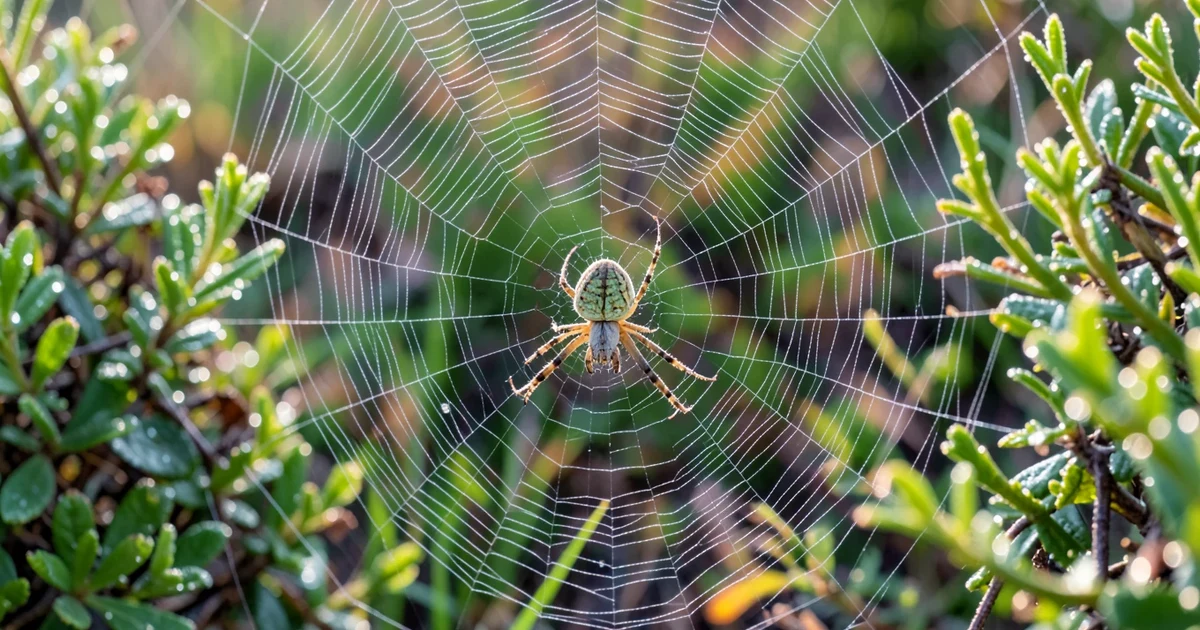
The spider hanging head-down in the middle of a wheel-shaped web across a garden path in September is an orb weaver. There are dozens of species, they are the most visible spiders of late summer, and not one of them in North America is medically significant.
The common ones
Cross orbweaver (Araneus diadematus) — introduced from Europe and now widespread in the north and the Pacific Northwest. Brown to orange, with a distinct white cross of spots on the abdomen. The classic garden spider of British and northern European gardens.
Black-and-yellow garden spider (Argiope aurantia) — large, unmistakable, bold black and yellow, with a heavy zigzag of white silk down the centre of the web. That zigzag is called a stabilimentum and its function is still argued over — web advertisement to birds, camouflage, prey attraction, or some combination.
Marbled orbweaver (Araneus marmoreus) — a swollen orange or cream abdomen with dark marbling. The orange form gets called the pumpkin spider and produces a reliable autumn wave of alarmed photographs.
Spiny-backed orbweaver (Gasteracantha cancriformis) — small, flat, white or yellow with six red spines around the edge. Southeastern, and it looks manufactured.
Barn spider (Araneus cavaticus) — brown, on buildings and porches, active at night. Charlotte, in the book, was one.
Golden silk orbweaver — deep south, elongate, with tufts on the legs and genuinely golden silk. The introduced joro spider is a relative and now overlaps with it.
What they do
They build a fresh web most nights, because orb silk loses its stickiness as it ages and collects dust and debris. Most species eat the old web first, recycling the protein, then spin a new one before dawn — which is why the web across the path you cleared yesterday is back this morning.
The spider sits either at the hub or in a retreat at the edge, holding a signal thread that transmits vibration from the web.
The empty hub — the free zone at the centre where the spiral stops — is worth noticing, because it is what distinguishes a real orb web from the concentric rings people often remember. The spiral runs continuously from near the centre outward; it is one thread, not a set of circles.
Why they are suddenly everywhere
They are not. They hatched in spring, at a size you would not notice, and they have been growing all summer in the same hedge.
By late August they are adult, which for a female means large and heavy with eggs, and their webs are correspondingly large. Then they lay an egg sac, and the frosts kill them.
The generation you are meeting is ending. The egg sac overwinters and the whole thing repeats — the same seasonal pattern that puts house spiders on the living room floor in September, though for a different reason: why there are suddenly spiders everywhere in autumn.
Bites
Very rare and not significant. Orb weavers are reluctant to bite, drop from the web when disturbed, and have fangs that generally cannot penetrate human skin. A bite would produce a brief sting.
If a spider is in a neat geometric web, it is not a spider to be concerned about — the general point in identifying a spider by its web. The webs worth looking at properly are the untidy tangles in dark voids.
Living with them
The reasonable approach is to leave the ones that are not in the way and move the ones that are.
- Walking into a web is unpleasant and harmless. The spider is more likely to drop away than to end up on you.
- Moving one — take the web down with a stick and the spider will rebuild elsewhere, usually within a night.
- Porch lights attract the insects that make a porch a good web site. Turning them off, or switching to warm-toned bulbs, relocates the spiders without touching them.
A single orb weaver takes a substantial number of flying insects out of a garden over a season, which is the argument for leaving the ones over the flowerbed even while removing the one across the door.
Not orb weavers
- Widows build untidy tangles, not wheels, and the marking is underneath — black widow or common house spider.
- Funnel weavers build a flat sheet with a tube retreat, usually over grass.
- Crab spiders sit in flowers with no web at all, front legs held out sideways.
- Jumping spiders hunt by sight and build only a silk retreat — jumping spiders.
Species referenced
If you think you were bitten
- Most suspected spider bites are not spider bites. Studies of patients presenting with a “spider bite” repeatedly find that the large majority are bacterial skin infections — frequently MRSA — which need antibiotics rather than reassurance. A spreading, painful, pus-filled sore is far more likely to be an infection than a spider.
- Wash it, ice it, and watch it. Clean the area with soap and water, apply a cold pack, and keep an eye on it.
- Get medical care if the wound spreads or darkens, if you develop cramping, sweating, fever or severe abdominal pain, or if you are confident it was a widow or a recluse.
- Bring the spider only if it is already dead and to hand. Do not go looking for it. Doctors treat symptoms, not species.
In the US, the Poison Help line is 1-800-222-1222. This site is a reference, not medical advice.
Keep reading
- The Joro Spider: Large, Yellow, and Not a ThreatAn introduced orb weaver spreading through the southeast. Big and conspicuous, harmless, and covered far out of proportion to what it does.
- Identifying a Spider by Its WebWeb architecture is fixed by family, so the web identifies the group even when the spider is hidden. Four shapes cover almost everything you will find.
- Getting a Spider Out of the House Without Killing ItThe glass-and-card method, what to use for a large one, and why putting a house spider outside in October is worse for it than the garage.