

The Big Spider in the Bath: What It Is and How It Got There
By IdentifyThese Editorial · · 3 min read
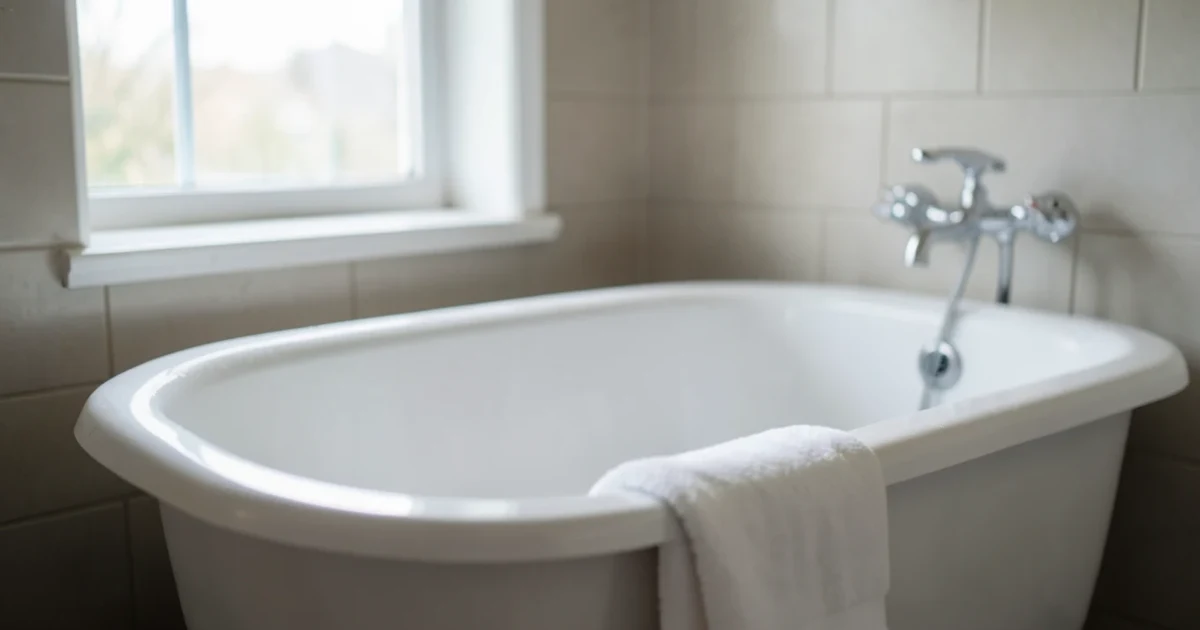
The plughole theory is the most durable piece of household folklore about spiders, and it is impossible for a simple plumbing reason.
Every bath, sink and shower has a U-bend below it holding a permanent plug of standing water. That water is there specifically to block sewer gas, and it blocks everything else too. A spider cannot swim up through it.
What actually happened
It fell in, and it cannot get out.
Bath and sink glazing is far too smooth for a spider's tarsal claws and adhesive hairs to grip, and the sides are steep. A spider that wanders over the rim at night is stuck there until morning.
They are wandering because it is autumn and mature males have left their webs to look for females — the seasonal pattern in why there are suddenly spiders everywhere. They are also seeking water, because central heating dries a house out and the bathroom is where the humidity is.
Which is why bath spiders are large: they are adult males, and adult males are the ones walking.
Getting it out
The towel. Drape one over the edge with the end reaching the bottom of the tub. Leave it overnight. This is the least stressful option for everyone and it usually works.
The glass and card. Put a glass over it, slide a piece of card underneath, lift, carry outside or to a garage. Card, not paper — paper flexes and lets legs through.
A long-handled spider catcher, if the size is genuinely a problem. They work well and keep the animal at arm's length.
Not the plughole. Washing it down does not remove it. Spiders survive submersion for surprisingly long — they carry air trapped in body hairs and their oxygen demand is very low — and the trap is a humid chamber with an exit at the top. It comes back, occasionally the same evening.
Where to put it
Not the garden, if it is a house spider. Tegenaria and Eratigena are indoor animals in much of their range and a September night outdoors is not somewhere they are adapted to. A garage, a shed or an outbuilding is kinder and about as effective.
Which is a small point, and it matters more than it sounds: the release that feels most humane is often the one the animal does not survive.
Preventing it
- Leave the plug in overnight, which removes the trap entirely.
- Or leave a flannel or towel permanently draped over the edge.
- Deal with the outdoor lighting near doors and windows, which draws the insects that draw the spiders.
- Seal gaps under doors and around pipework.
None of this empties the house, and it is not meant to.
What it probably is
In North America, most likely a giant house spider or a common house spider, and in the south possibly a southern house spider — the females of which are large, dark and frequently reported as something worse.
A wolf spider is possible, especially at ground level, and is often mistaken for a recluse. The separation is straightforward and mostly about size: brown recluse or wolf spider.
Cellar spiders — very long thin legs, small body, in the ceiling corner rather than the tub — are the subject of the most repeated falsehood in the subject. They are not the most venomous spider in the world and their fangs are not too short to bite; the daddy long-legs myth works through where the claim came from.
Should you worry
Almost certainly not. Of the spiders that turn up in North American bathrooms, two groups are medically significant — widows and recluses — and neither is likely to be in a bath.
Widows sit in untidy tangle webs in dark undisturbed places, not on open porcelain, and the check for one is the underside rather than the colour: black widow or common house spider.
Recluses are absent from most of the continent entirely, which is worth establishing before anything else — do brown recluses live where you do.
Species referenced
If you think you were bitten
- Most suspected spider bites are not spider bites. Studies of patients presenting with a “spider bite” repeatedly find that the large majority are bacterial skin infections — frequently MRSA — which need antibiotics rather than reassurance. A spreading, painful, pus-filled sore is far more likely to be an infection than a spider.
- Wash it, ice it, and watch it. Clean the area with soap and water, apply a cold pack, and keep an eye on it.
- Get medical care if the wound spreads or darkens, if you develop cramping, sweating, fever or severe abdominal pain, or if you are confident it was a widow or a recluse.
- Bring the spider only if it is already dead and to hand. Do not go looking for it. Doctors treat symptoms, not species.
In the US, the Poison Help line is 1-800-222-1222. This site is a reference, not medical advice.
Keep reading
- Why There Are Suddenly Spiders Everywhere in AutumnThey are not coming in from the cold. The spiders in your house in September have been there all year, and they are moving because they are looking for mates.
- Wolf Spider or Nursery Web Spider? Watch What She CarriesA wolf spider carries her egg sac attached to her spinnerets and her young on her back. A nursery web spider carries hers in her jaws. Eye arrangement confirms it.
- The Big Spider in the Garden Web: Orb WeaversThe large spider in the wheel-shaped web across your path is an orb weaver, it is harmless, and it will be gone by December on its own.