
Is My Stamp Collection Worth Anything?
By IdentifyThese Editorial · Reviewed · 3 min read
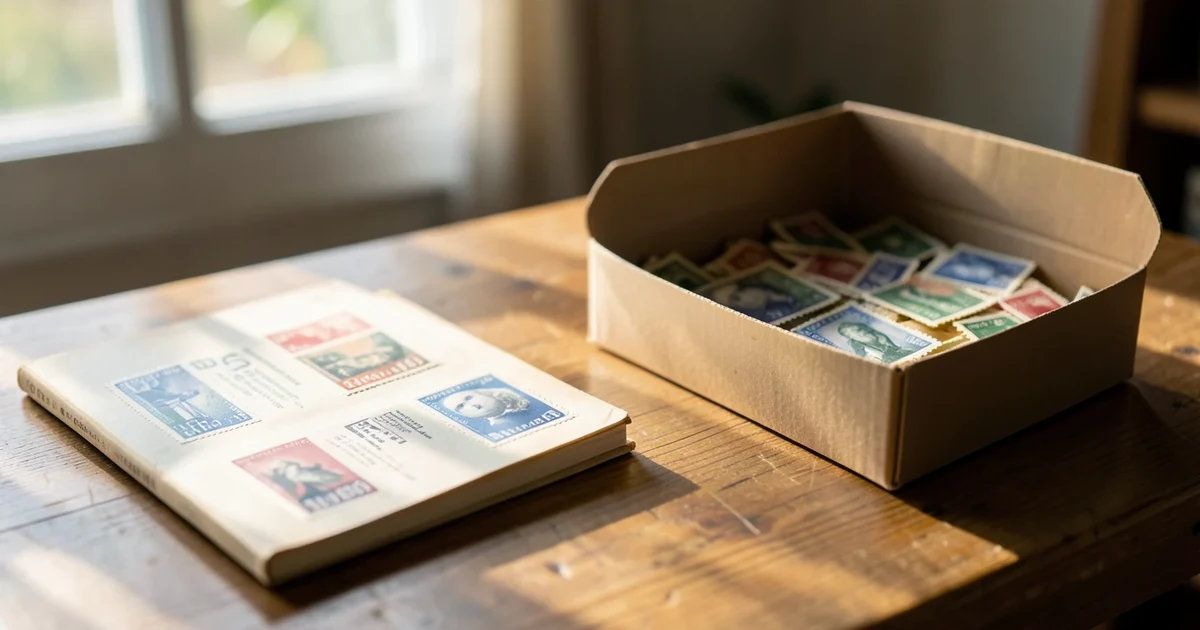
Most inherited collections are worth a modest sum. That is not a comment on the collection; it is what mass production does to a market.
Why
They were printed in enormous numbers. A twentieth-century commemorative issue runs to tens or hundreds of millions. Everyone who collected kept them, and they all survive.
Everyone collected. Stamp collecting was one of the largest hobbies in the world through the middle of the twentieth century, so the supply of saved material is vast and the current demand is smaller.
Condition was rarely a concern. Stamps were hinged into albums, which reduces mint value substantially, and stored in conditions that caused toning and foxing.
Catalogue value is not selling value
This causes more disappointment than anything else in the hobby.
A catalogue price is a retail benchmark for a stamp in a specific, quite demanding condition. Real outcomes:
- Auction realisations are commonly a fraction of catalogue.
- Dealers buy at well below that again, because they carry the stock and the risk.
- Common material has a catalogue value and effectively no market.
A collection with a headline catalogue total of several thousand may realise a few hundred, and that is a normal outcome rather than someone taking advantage.
Where value does concentrate
Early issues. Nineteenth century, and particularly the first issues of any country.
Condition. The largest single factor after identification. Centring, gum, and absence of thins, creases and short perforations. The same catalogue number can differ by a factor of a hundred between poor and superb — condition and centring covers what is being judged.
Varieties. Perforation and watermark differences that separate a common entry from a scarce one. This is why identification matters before valuation.
Genuine errors. Catalogued production faults, not damage. Errors and varieties sets out the distinction, and the category is the most heavily faked in philately.
Covers. Whole envelopes with interesting postmarks, routes or usages. Frequently worth far more than the stamp on them.
What to do before selling
Do not soak anything off an envelope. This is the most common irreversible mistake. The cover is often the valuable part.
Do not clean, repair or regum anything. All are detectable and all reduce value.
Do not sort by removing "damaged" stamps. What looks damaged to a beginner is sometimes a variety.
Do get an estimate from an auction house. Most give free verbal valuations, and they see enough volume to be accurate. Their incentive is to identify anything worth consigning.
Do keep it dry and out of light. Damp causes foxing and light fades colour permanently.
The realistic routes to selling
- Auction, for anything with real value. Commission applies but the market sets the price.
- A dealer, for speed and certainty, at a lower figure.
- Selling it yourself, which works for identified individual stamps and badly for bulk.
- A collector club, which is often the best route for a mixed accumulation.
Bulk unsorted material sells by weight or by the album, and the figure will be low. That is the market rather than an insult.
The part worth keeping
If a collection has sentimental value, that is a reasonable thing for it to have. A great many collections are worth more as an object someone assembled over forty years than as a lot in a sale, and knowing the financial answer makes that an easier decision rather than a harder one.
Before deciding anything, work out what is actually in it — how to identify an unknown stamp covers the order to work in.
What to do with a collection nobody wants to buy
It happens, and there are better options than a bin.
Local societies take donations and use them for beginner packets and junior members. Schools and scout groups use them for projects. Some charities accept stamps for fundraising, selling them in bulk by weight.
A collection someone assembled over decades passing to a beginner who will actually look at it is not the worst outcome available.
Topics referenced
Keep reading
- How to Identify an Unknown StampCountry first, because catalogues are organised by it. Then printing, perforation and watermark, which is where the value actually hides.
- Starting a Collection Without Wasting MoneyBuy tools before stamps, pick a narrow subject, and ignore the packets of a thousand worldwide — which is where most beginners' money goes.
- Storing a Collection Without Damaging ItHinges reduce mint value permanently, PVC pages destroy stamps slowly, and humidity is the enemy that does the most damage unnoticed.