
Storing a Collection Without Damaging It
By IdentifyThese Editorial · Reviewed · 3 min read
Most damage to collections happens slowly, in storage, and is not noticed until someone tries to sell.
Hinges
A stamp hinge is a small piece of gummed paper folded to attach a stamp to a page. They were standard for a century and they are the reason so much older mint material is worth less than it might be.
On mint stamps a hinge disturbs the original gum permanently. Never-hinged material commands a substantial premium over lightly hinged, and the difference cannot be undone. Removing a hinge always leaves a mark and often takes a thin patch of paper with it.
On used stamps hinges are harmless — the gum is already gone.
Use mounts instead for anything mint. A mount is a clear sleeve with an adhesive back that attaches to the page rather than the stamp. It costs more and it protects the gum, which is frequently a large share of the value.
Album and page materials
Acid-free is the requirement. Ordinary paper and card contain lignin and acids that migrate into stamps over decades, producing browning and foxing.
Avoid PVC. Soft plastic sleeves made from PVC release plasticisers that stick to stamps, and the damage is progressive and irreversible. Modern archival pages are polypropylene, polyethylene or Mylar, and reputable suppliers say which.
If a page smells of plastic, it is the wrong material.
Stockbooks with card strips are good for working material. Check the strips are acid-free.
Humidity, which does the most damage
The single biggest threat, and the least visible.
Too humid and gum activates and stamps stick to each other, to mounts, and to pages. Foxing — brown spots caused by mold — develops and cannot be reversed.
Too dry and paper becomes brittle.
Aim for stable moderate humidity, roughly 45 to 55 per cent, and stability matters more than the exact figure. A cool interior room is better than an attic or a basement, both of which cycle.
Light
Fading is permanent and it is the damage people most often cause without noticing.
Keep albums closed and stored upright on a shelf, away from windows. Never display stamps in sunlight, and never under strong artificial light for long periods. Some inks — particularly reds and purples — fade markedly.
Handling
Tweezers, always. Skin oils mark paper and the effect appears years later. Stamp tweezers have flat rounded tips; ordinary tweezers cut.
Clean dry hands for anything that must be handled directly.
Never use adhesive tape, ordinary glue, staples, paper clips or sticky notes anywhere near a collection.
Storage in practice
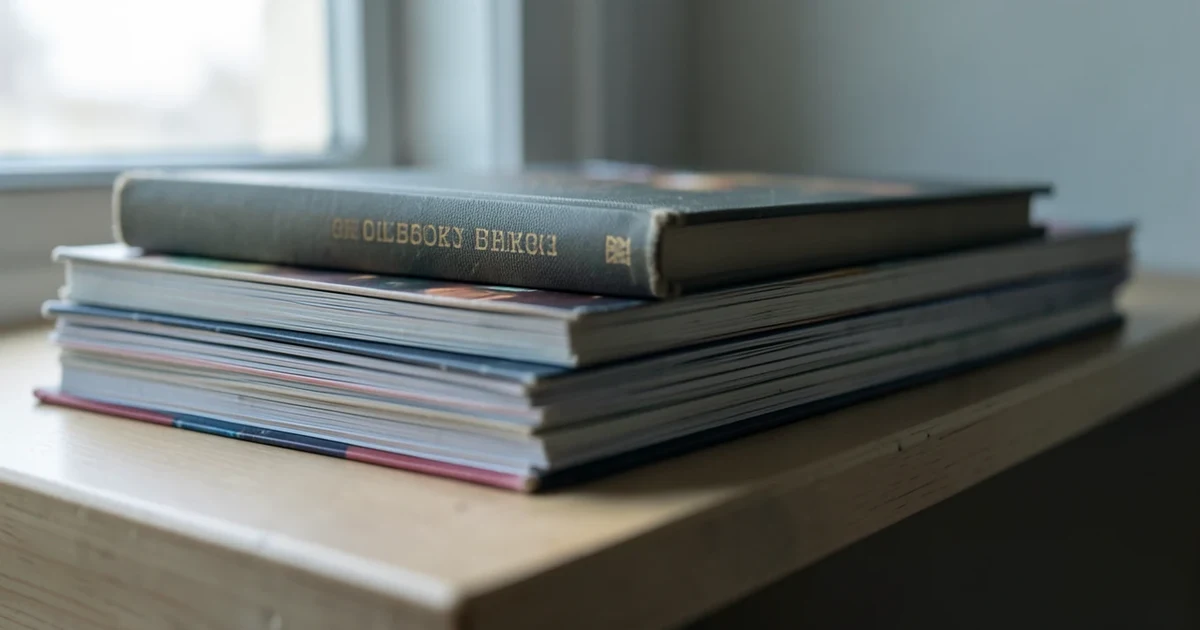
- Upright, like books. Stacking flat compresses stamps and mounts.
- Cool, dry, dark, stable. An interior cupboard rather than an attic, a garage or a basement.
- Away from exterior walls, which cycle in temperature.
- Silica gel in a sealed box if the room is unavoidably damp, replaced periodically.
- Not in the loft. Heat and humidity cycling there ruins more collections than anything else.
Before you sell
Do not tidy it. Specifically:
- Do not remove stamps from covers, for the reasons in do not soak that envelope.
- Do not press out creases or attempt any repair — it counts as faking whatever the intent.
- Do not clean anything.
- Do not rearrange a specialised collection into an album by country. An arrangement someone spent years on can itself carry information a buyer values.
The reversible action is always leaving it alone.
Inspect it once a year
Storage is not a decision you make once. Take the albums out annually, open them, and look for the early signs of trouble.
Foxing appears as small rust-coloured spots and spreads. Stamps stuck to mounts have usually been through a humid spell. A musty smell means mold somewhere in the room, and it will reach the paper before it reaches you.
Catching any of those in the first year is the difference between moving the boxes and losing the collection.
Topics referenced
Keep reading
- Forgeries, Fakes and Why Certificates ExistPrinting method catches most classic forgeries. Overprints, regumming and repairs need an expert, and any expensive stamp should carry a certificate.
- Do Not Soak That EnvelopeThe cover is frequently worth more than the stamp on it. Postmarks, routes and usages carry the value, and soaking destroys all of them.
- Starting a Collection Without Wasting MoneyBuy tools before stamps, pick a narrow subject, and ignore the packets of a thousand worldwide — which is where most beginners' money goes.