
Starting a Collection Without Wasting Money
By IdentifyThese Editorial · Reviewed · 3 min read
The commonest beginner mistake is buying stamps first. Tools cost less and do more.
Buy tools first
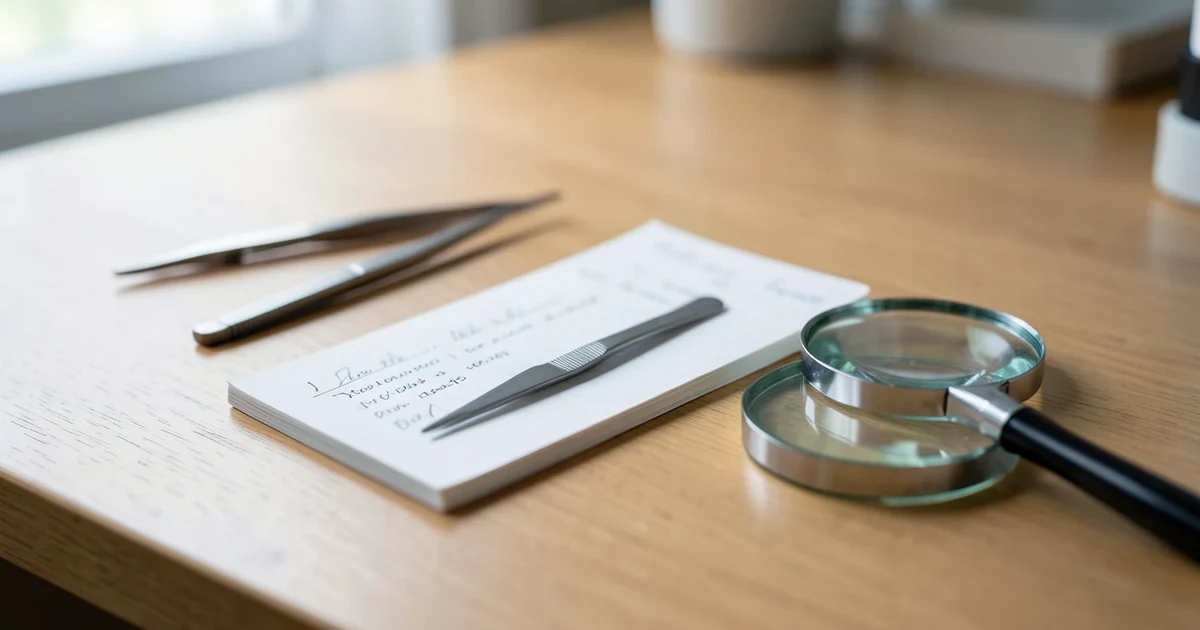
Under thirty pounds together, and they answer questions no amount of looking will:
- Perforation gauge. The single most useful object in the hobby, and it costs a few pounds. It separates catalogue entries that are otherwise identical, which is where the value hides.
- Tweezers, flat-tipped and rounded. Skin oils mark paper and the damage appears years later.
- A magnifier, 5x to 10x. For printing method, and for spotting repairs.
- A watermark tray and fluid. Black tray, a few drops, and an invisible variety becomes visible.
- A catalogue for whatever you are collecting, or a library that holds one.
That set will identify most of what you already have, which is a better first move than buying more.
Pick something narrow
The commonest failure is collecting everything. Worldwide accumulation has no end, no structure and no satisfaction, and it is what a shoebox of unsorted stamps is.
A collection needs a boundary. Reasonable ones:
- One country, one reign or one period
- A theme — birds, ships, maps, a sport
- Postal history of one town or one route
- One issue in depth — every variety of a single definitive series
- Postmarks of a region
Narrow is what makes completion possible and makes the knowledge cumulative. A specialised collection of a single issue is also worth more than the same money spread across the world.
What not to buy
Packets of a thousand worldwide. Made from the commonest material in existence, sold by weight upstream. Fine as practice material for identification, worthless as a collection.
"Investment" stamps. Anyone selling stamps as an investment is selling at retail into a market where you will sell at wholesale. The gap is large.
Expensive stamps without a certificate. For anything running into hundreds, a certificate from a recognised expertising body is not optional — forgeries and fakes covers why.
Kiloware, unless you enjoy sorting. It is mixed on-paper material sold by weight and it is mostly modern definitives.
Where to buy
- Club auctions and society sales. The best value in the hobby, and the people are the actual resource.
- Established dealers, who have a reputation to protect and will take something back.
- Auction houses, for anything significant.
- Online marketplaces, cautiously — condition is described optimistically and photographs hide thins and repairs.
Join a society
The genuinely useful advice, and the one beginners skip.
A local philatelic society costs very little, meets monthly, and contains people who will identify things for you, lend catalogues, and stop you overpaying. National societies for a specific country or theme publish research that does not exist anywhere else.
Condition, from the start
Learn what condition and centring means before you buy anything, because it is the largest value factor after identification and it is the easiest thing for a beginner to get wrong.
The habit worth building: buy fewer, better. Ten good stamps are worth more, and are more satisfying, than a hundred poor ones — and the poor ones never become good.
And store it properly
Mounts rather than hinges for mint material, acid-free pages, upright, cool, dark and dry. Most damage to collections happens in storage over years — storing a collection sets out what actually causes it.
A reasonable first year
Buy the tools. Sort what you already have or can get free — used stamps off incoming mail, a bag from a society. Learn to use the perforation gauge on common material where a mistake costs nothing.
Then pick the subject, and start buying deliberately rather than opportunistically. Most people who give up did so because they were accumulating rather than collecting, and the difference is entirely whether there is a boundary.
Topics referenced
Keep reading
- Storing a Collection Without Damaging ItHinges reduce mint value permanently, PVC pages destroy stamps slowly, and humidity is the enemy that does the most damage unnoticed.
- How to Identify an Unknown StampCountry first, because catalogues are organised by it. Then printing, perforation and watermark, which is where the value actually hides.
- Is My Stamp Collection Worth Anything?Usually a modest sum. Stamps were printed in the hundreds of millions, catalogue values are not selling prices, and condition decides most of what remains.