
Identifying Trees in Winter, With No Leaves at All
By IdentifyThese Editorial · · 3 min read · updated August 2026
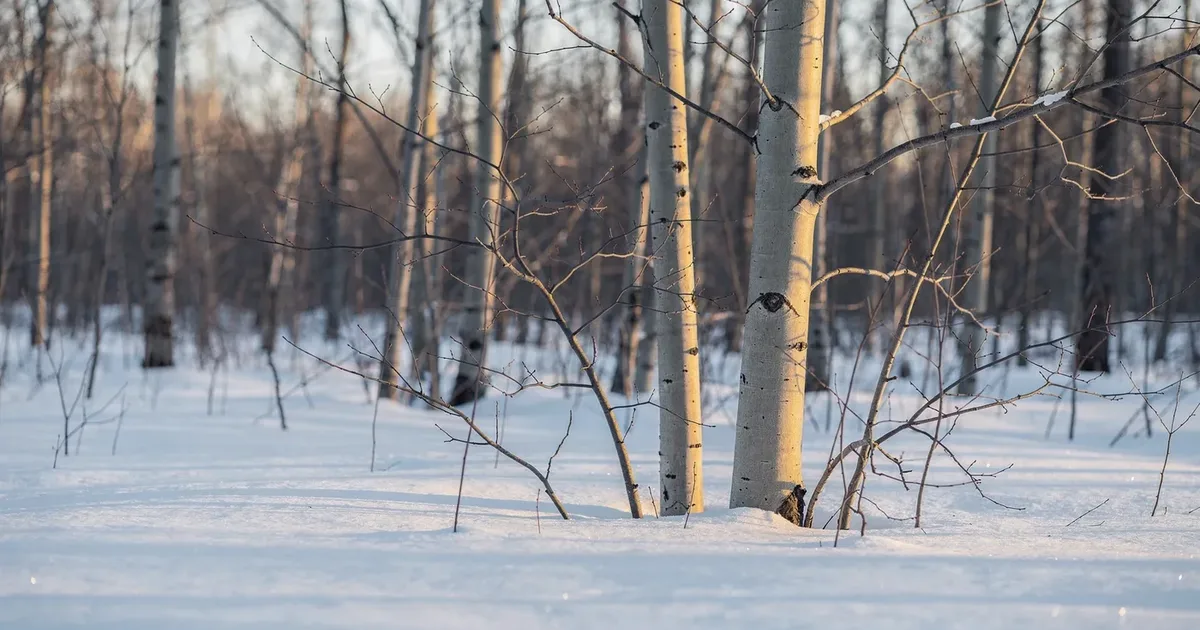
Winter identification has a reputation for being difficult, and it mostly comes from the assumption that leaves are the primary character. They are not. They are simply the most obvious one.
Several winter characters are actually more reliable than leaves, because they do not vary with light, browsing or the age of the shoot.
Start where you always start: arrangement
Buds follow the same arrangement as leaves. Opposite buds mean an opposite tree — MAD Cap Horse — and that still eliminates most species in one look.
Leaf scars work the same way. Those are the marks left on the twig where last year's leaves detached, and their arrangement is the arrangement of the leaves that made them.
Buds
Bud shape is species-specific and often distinctive enough on its own:
- Beech — long, slender, sharply pointed, splayed at an angle. Like a small cigar or a fencing foil. Unmistakable.
- Ash — stout, dark brown to black, sitting above a leaf scar shaped like a shallow smile.
- Sycamore — a single cone-shaped bud with the base of the leaf stalk having capped it like a hood.
- Oaks — a cluster of several buds at the very tip of the twig. No other common group does this.
- Willow — a single scale covering the bud like a cap.
- Horse chestnut — very large and sticky.
Leaf scars and bundle scars
The leaf scar is the small mark where the leaf detached. Inside it are tiny dots — bundle scars — where the veins ran into the leaf.
Their number and arrangement is diagnostic. Ash has a curved line of many; walnut has three groups in a shape often compared to a monkey's face; maple has three.
A hand lens helps and is not essential.
Bark
The character most people want to use, and the one that takes longest to learn — because bark changes with age. A young trunk and a mature trunk of the same species can look unrelated. Judge the main trunk of a mature tree.
Some that are learnable immediately:
- Beech — smooth, tight, pale grey at every age. Almost every other large tree furrows eventually. Beech never does.
- Sycamore — flaking in jigsaw patches to reveal chalk-white upper limbs. Visible from a very long way off.
- Paper birch — chalky white, peeling in horizontal papery sheets.
- Northern red oak — flat-topped shiny ridges running down the trunk like ski tracks.
- White oak — pale ash-grey, loose overlapping scaly plates.
- White ash — a tight, regular diamond lattice.
- Sugar maple — long vertical plates lifting free along one edge.
- Black walnut — very dark, nearly black, deeply furrowed diamonds.
- Shagbark hickory — long strips curling away from the trunk at top and bottom. Nothing else looks like it.
Look down
Fruit persists long after leaves fall, and often lies beneath the tree all winter:
- Acorns — oak. Cup shape tells you which group.
- Winged samaras — maple or ash. Paired means maple, single means ash.
- Spherical seed balls on stalks — sycamore. One per stalk; the London plane usually has two or more.
- Hard green or black husks — walnut, and the stain on the ground beneath confirms it.
- Prickly husks with triangular nuts — beech.
- Cones — conifers, and cone size and shape identify the species.
Persistent leaves
Some trees keep dead leaves through winter, a habit called marcescence, and it is a useful sign:
- Beech — young trees hold papery tan leaves all winter, lighting up the bare understorey.
- Oaks, particularly young ones and pin oak, often do the same.
- Hornbeam and ironwood frequently retain some.
Silhouette
At a distance, growth form is informative on its own. Elms vase outward. Pin oaks hold their lower branches angled sharply downward. Poplars are narrow and upright. Oaks are broad with heavy horizontal limbs.
This is the least precise character and the first one you use, because it is visible from the car — and it tells you what to expect before you reach the tree.
Species referenced
Start here: opposite or alternate?
Look at where the leaves join the twig. Are they in matched pairs directly across from each other, or staggered one after another? The vast majority of trees are alternate, so finding an opposite tree removes almost everything else in one step.
In North America, opposite-leaved trees are remembered as MAD Cap Horse: Maple, Ash, Dogwood, Caprifoliaceae (viburnums and elders), and Horse chestnut. That is very nearly the whole list.
Check partway along a healthy twig rather than at the tip, where crowding can make alternate leaves look paired. And check more than one twig.
Keep reading
- Identifying a Tree by Its BarkBark changes with age, which is why most bark guides fail. Work with texture, direction and colour under the surface rather than matching a photograph.
- Opposite or Alternate? The Question That Halves the AnswerOnly a handful of North American trees have opposite leaves. Checking this first eliminates most species in seconds — here is how to read it, and the mnemonic that lists them.
- Maple or Sycamore? Look at the Bark, Not the LeafBoth have big lobed leaves and both are everywhere. The leaves are genuinely similar; the bark and the seeds are not, and either settles it in seconds.