
Most Cats Are Not a Breed
By IdentifyThese Editorial · Reviewed · 3 min read
A breed is a documented pedigree — a record of ancestry maintained by a registry. It is not a look.
Which means the honest answer to what breed is my cat, for most cats, is that there isn't one.
The numbers
Estimates put the proportion of pedigreed cats in North America at somewhere between three and ten per cent. Everything else is a domestic shorthair or domestic longhair: mixed ancestry, no registry, no breed.
That is not a lesser category. Mixed-ancestry cats avoid the concentrated genetic problems that come with closed breeding populations, and they are on average healthier and longer-lived than the more exaggerated pedigree breeds.
Patterns are not breeds
This is where most of the confusion comes from, because the words sound like breed names.
| Term | What it actually is |
|---|---|
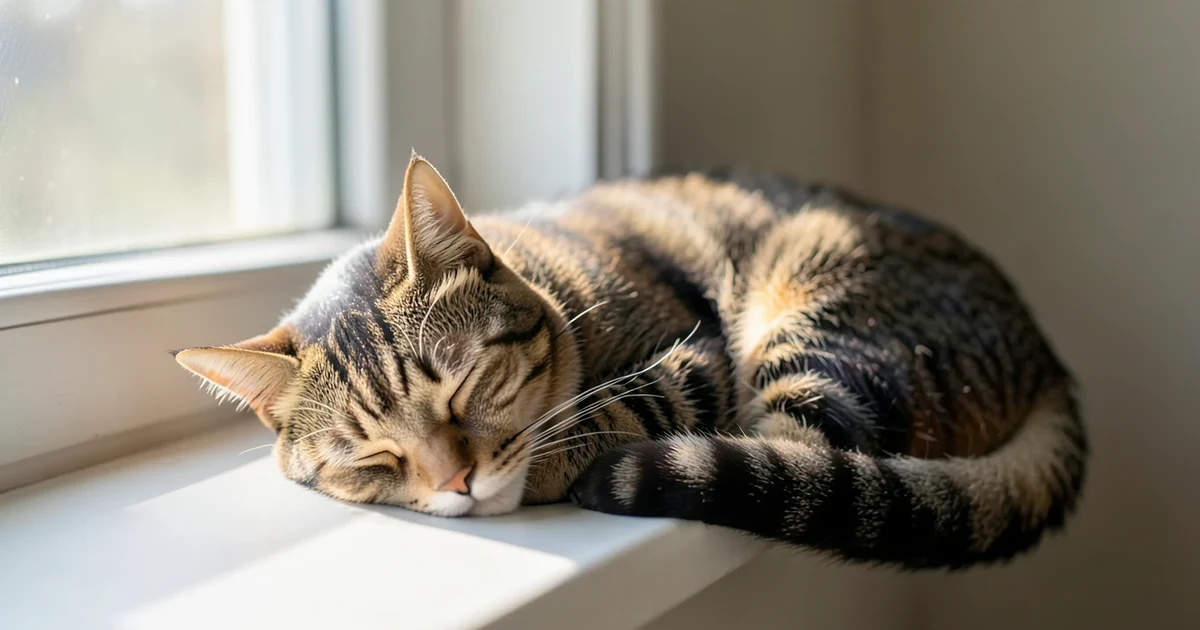
| Tabby | A coat pattern — mackerel, classic, spotted or ticked. Present in dozens of breeds |
| Calico | White with patches of orange and black. A colour arrangement |
| Tortoiseshell | Orange and black mingled without white. A colour arrangement |
| Tuxedo | Black with white chest and paws. A bicolour arrangement |
| Ginger / orange | A colour |
| Tortie point | A pattern combination, found in several breeds |
Calico and tortoiseshell are almost always female, incidentally, because the orange gene sits on the X chromosome and it takes two X chromosomes to show both colours. A male calico is rare and usually sterile.
None of these tells you anything about breed.
What does indicate a breed
Not colour. Three things:
Build. Registry standards describe body type — cobby and heavy, svelte and fine-boned, large and rectangular. A British Shorthair is defined by a compact heavy frame, not by being grey.
Coat texture. A British Shorthair's coat is dense enough to stand away from the body. A Russian Blue's carries silver-tipped guard hairs that shimmer. A Devon Rex's is a short loose wave. These are structural and hard to fake.
Head shape. The single most useful character among the big longhairs — a squared muzzle, a straight profile or a round face point at three different breeds.
That is what the identification key asks about, and it asks about pattern last, where it sorts rather than eliminates.
The three most common wrong answers
"My big fluffy cat is a Maine Coon." Usually a domestic longhair. A Maine Coon has a squared blocky muzzle and a rectangular heavily boned frame. Being large and fluffy is not enough — most large fluffy cats are moggies.
"My grey cat is a Russian Blue." Usually a domestic shorthair. A Russian Blue is slender and fine-boned with vivid green eyes and a silver-tipped double coat. A grey cat with copper eyes is not one.
"My spotted cat is a Bengal." Usually a spotted tabby. A Bengal has rosettes — two-toned spots with a darker outline — and a long muscular body. Plain solid spots on an ordinary build are a tabby.
What about DNA tests
They work well on a documented pedigree and poorly on a mixed cat.
Domestic cats have far less breed structure than dogs — most breeds are recent, many are regional populations formalised in the twentieth century, and the shared ancestry is enormous. A test that reports your moggy as 14% Maine Coon is reporting a statistical similarity to a reference panel, not a great-grandparent.
The health screening in those tests is the genuinely useful part. Breed percentages on a mixed cat are entertainment.
Why any of it matters
Two practical reasons.
Health. Several breeds carry conformational problems that follow directly from the appearance they were bred for — Persians and brachycephalic airway disease, Scottish Folds and a cartilage mutation that causes progressive arthritis in every folded cat. Knowing what a breed is buys you the questions to ask.
Expectations. Breed temperament descriptions are averages over a population and say very little about an individual. A domestic shorthair's personality is not predictable from its appearance, and neither, really, is a pedigree cat's.
If the key sends you to domestic shorthair, it has not failed. It has told you the most likely true thing.
Breeds referenced
Keep reading
- Calico, Tortie, Tabby and Tuxedo Are Not BreedsThey describe how the colour is arranged, and they occur across many breeds and in most cats of none. Here is what each one actually means.
- Your Grey Cat Is Probably Not a Russian BlueThree grey breeds exist and all three are uncommon. The eye colour and the coat texture separate them from the grey moggy, which is what most grey cats are.
- Is It a Maine Coon, or Just a Big Fluffy Cat?Size is not the test. A Maine Coon has a squared muzzle and a rectangular frame, and most large fluffy cats have neither.