

Is My Rock Valuable? An Honest Answer
By IdentifyThese Editorial · · 4 min read · updated August 2026
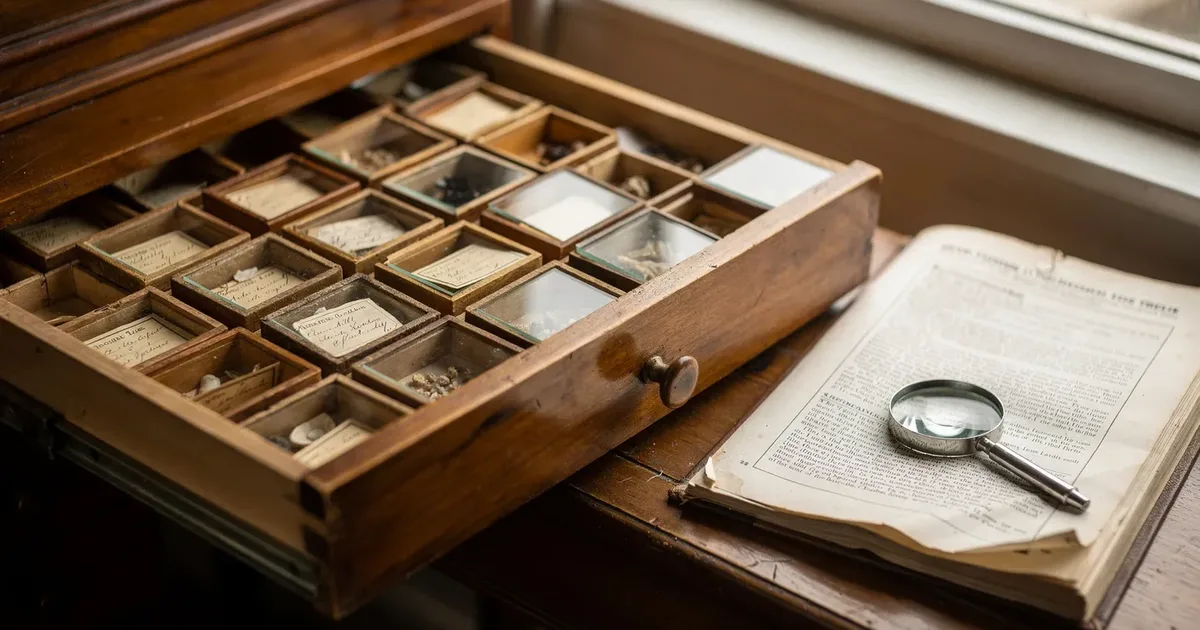
The honest answer to "is my rock valuable" is almost always no — and understanding why is more useful than a false yes.
Why most specimens are worth nothing
Rocks are the most abundant solid object on Earth. Quartz alone makes up roughly twelve percent of the continental crust. A mineral being pretty, unusual to you, or hard to identify does not make it scarce, and scarcity is what sets price.
There is also a supply problem that beginners rarely appreciate. Commercial mines produce specimen-grade material by the tonne. A well-formed amethyst geode that looks like a museum piece can be bought for the price of a restaurant meal, because Brazil and Uruguay ship them by the shipping container. Your specimen is competing with that.
None of this makes collecting pointless. It just means the value in the hobby is in the finding, the learning, and the specimen itself — not in resale.
What actually creates value
Five things, roughly in order of importance:
1. Crystal quality. A sharp, undamaged, well-terminated crystal is worth many times a broken fragment of the same mineral. Damage is the single biggest destroyer of specimen value, and most field-collected material is damaged during collection.
2. Rarity of the species. Common minerals in nice crystals are cheap. Genuinely rare species have collector markets regardless of appearance. There are around 6,000 recognised mineral species, and perhaps 200 are common.
3. Locality. A specimen from a famous, closed, or exhausted mine carries a premium. This is why documentation matters — an unlabelled specimen is worth substantially less than the same specimen with a reliable locality label.
4. Aesthetics. Contrast, composition, and colour. A group where a bright crystal sits on a contrasting matrix outperforms a loose crystal of the same quality.
5. Size — within limits. Bigger is better up to the point where it stops being displayable. Thumbnail and miniature specimens have their own dedicated markets.
The finds that are genuinely worth pursuing
Being realistic about the rest does not mean nothing is worth anything. These are the cases where a serious look is justified:
- Gold that passes the streak, scratch and weight tests. Verify with the gold vs pyrite tests first.
- Gem-quality transparent crystals of anything. Clarity plus colour plus size is where the money is, and it is rare in field-collected material.
- Fossils, especially vertebrate material. This is a separate field with its own legal complications — vertebrate fossils are protected on public land in many countries.
- Meteorites. Genuinely valuable and genuinely rare. Almost every suspected meteorite is slag, magnetite, or industrial waste; the real ones have a fusion crust, are magnetic, are unusually dense, and contain nickel.
- Specimens from a locality that is now closed. Provenance is the value here, not the rock.
How to get an actual appraisal
In roughly this order:
- Identify it. You cannot value an unknown. Run the identification key and get to a species.
- Search completed sales, not asking prices. On auction sites, filter to sold listings. Asking prices are aspirational; sold prices are the market.
- Take it to a local club. Lapidary and mineral societies exist in most regions, meet monthly, and will identify specimens for free. Members have handled thousands of specimens and will tell you the truth.
- University geology departments often run public identification services, particularly around open days.
- For anything that might be a gemstone, use a certified gemmological laboratory. Expect to pay a fee. Do not rely on a seller's own certificate.
Warnings worth taking seriously
Free online appraisals from buyers are not appraisals. Anyone offering to value your specimen and buy it in the same conversation has an obvious conflict of interest.
Assay scams are common in prospecting circles. Requests for an upfront fee to test material that is "showing promise" are a well-established fraud pattern.
Some minerals are hazardous. Galena and other lead minerals, cinnabar (mercury), arsenic-bearing minerals such as orpiment and realgar, and fibrous serpentine and amphibole (asbestos) all require care. Do not tumble, cut, sand, or heat unknown material, and wash your hands after handling.
Collecting law varies enormously. Many public lands prohibit collection, some permit it for personal use only, and archaeological or palaeontological material is protected almost everywhere. Check before you collect, not after.
The reframe worth making
The most interesting thing about a rock is usually not its price. A pebble of banded gneiss records a mountain range that no longer exists. A piece of basalt with olivine nodules is carrying material from the Earth's mantle. Neither is worth a penny, and both are more remarkable than most things you could buy.
Identify it properly, label it with where you found it, and the collection becomes worth something to you even when it is worth nothing to anyone else.
Mineral pages referenced
Keep reading
- There Is a Fossil in My Rock. What Now?Most fossils people find are common invertebrates worth keeping and not selling. Vertebrate material is different, legally and scientifically — here is the line.
- What to Do Before You Ask Anyone to Identify a RockA wash, a fresh break and four photographs turn an unanswerable question into an answerable one. Most identification requests fail on the photograph alone.
- A Rock With Crystals Inside: Geodes, Vugs and What They Are WorthA hollow lined with crystals is a geode; an irregular cavity in solid rock is a vug. Both form the same way, and neither is usually worth money.