

The Streak Test: The Most Underused Tool in Identification
By IdentifyThese Editorial · · 3 min read · updated August 2026
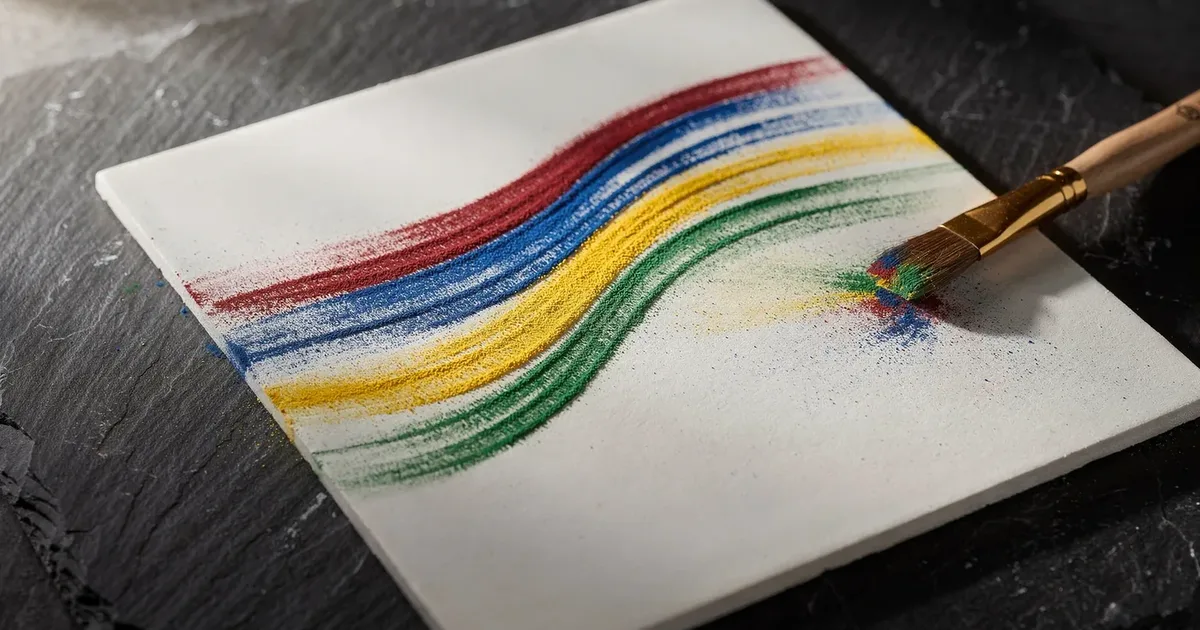
Colour is the first thing anyone notices about a mineral and the least reliable thing about it. Quartz occurs in a dozen colours. Fluorite occurs in more. Trace impurities at parts-per-million levels change a mineral's appearance completely while changing nothing about what it is.
The streak test removes that problem by looking at the mineral in powdered form, where surface effects and crystal-size effects disappear.
How to do it
Take the unglazed back of a ceramic tile, or the unglazed ring on the bottom of a coffee mug. Press the specimen against it and drag firmly, about two centimetres.
Look at the mark. If there is powder sitting loose, blow or brush it away and look at what is left on the plate.
That is the whole technique. It takes five seconds and it is free.
What the colours tell you
White or no streak. Almost all non-metallic minerals — silicates, carbonates, sulfates. This is the default and it narrows very little on its own, but combined with hardness it is powerful.
Red-brown. Hematite, essentially always. This holds whether the specimen is silvery, black, or dull red. Very few other things produce this colour.
Yellow-brown. Goethite and limonite. The distinction from hematite's red-brown is real and worth training your eye on: hold the two side by side once and it becomes obvious.
Black. Magnetite, and many other opaque metallic oxides and sulfides. Follow up with a magnet.
Lead grey. Galena, molybdenite, stibnite. All three are soft and heavy; cleavage separates them — cubes for galena, sheets for molybdenite, blades for stibnite.
Greenish black. Pyrite, chalcopyrite, marcasite. This is the colour that settles most false gold reports.
Golden yellow. Native gold. Almost nothing else.
Pale green. Malachite.
Light blue. Azurite.
Scarlet red. Cinnabar. Note that cinnabar is mercury sulfide — handle it minimally and wash your hands.
Copper red. Native copper.
Why it works when colour does not
Bulk colour is a surface phenomenon. A metallic sheen comes from light reflecting off a continuous surface; grind that surface into loose particles and the reflection disappears, leaving the material's true absorption colour.
Hematite is the standard demonstration. A specular hematite plate is a mirror. The same material as powder is the red pigment in ochre, red brick, and the red soils of the tropics. It has been used as a pigment for at least 70,000 years, which makes the streak test arguably the oldest mineral identification technique still in use.
The limits
Minerals harder than about 6.5 leave no streak. The plate is roughly Mohs 6.5, so quartz, garnet, topaz, tourmaline and corundum will scratch the plate rather than powder against it. You will see a white line — that is plate material, not mineral. This is still informative: no streak means hard.
Weathered surfaces lie. An iron-stained specimen will streak brown regardless of what it is. Break a fresh surface.
Some plates are the wrong hardness. Cheap porcelain varies. If in doubt, check your plate against a known quartz crystal — quartz should scratch it.
Where it fits in the sequence
Streak is the second test, after hardness. The two together eliminate most of a mineral list before you have looked at colour at all, which is the correct order of operations: test the reliable properties first, and use colour only to break ties.
Run both in the identification key and see how quickly the candidate list collapses.
A streak plate you already own
You do not need to buy anything. Any of these works:
| Source | Notes |
|---|---|
| Unglazed back of a bathroom tile | The standard. Offcuts are free at any tile shop. |
| Foot ring on a coffee mug | The unglazed circle the mug stands on. Always to hand. |
| Back of a ceramic floor tile | Coarser, which suits softer minerals. |
| Unglazed terracotta pot | Works, but the colour muddies pale streaks. |
Avoid glazed surfaces entirely — the mineral slides rather than powdering, and you will conclude that it left no streak when it simply had nothing to abrade against.
Keep the plate with your hand lens. The two together answer more questions than any other pair of tools an amateur can own.
Mineral pages referenced
Keep reading
- What Is This Black Shiny Rock?Eight things account for nearly every shiny black rock. Streak colour, weight and how it breaks separate all of them in about two minutes.
- Jade or Serpentine? What Most Green Stone Actually IsMost green stone sold as jade is serpentine. Four practical tests — the knife test, heft, sound and translucency — tell you which one you have.
- What to Do Before You Ask Anyone to Identify a RockA wash, a fresh break and four photographs turn an unanswerable question into an answerable one. Most identification requests fail on the photograph alone.