

Leaf Shape, Properly: Lobed, Toothed, Entire
By IdentifyThese Editorial · Reviewed · 3 min read
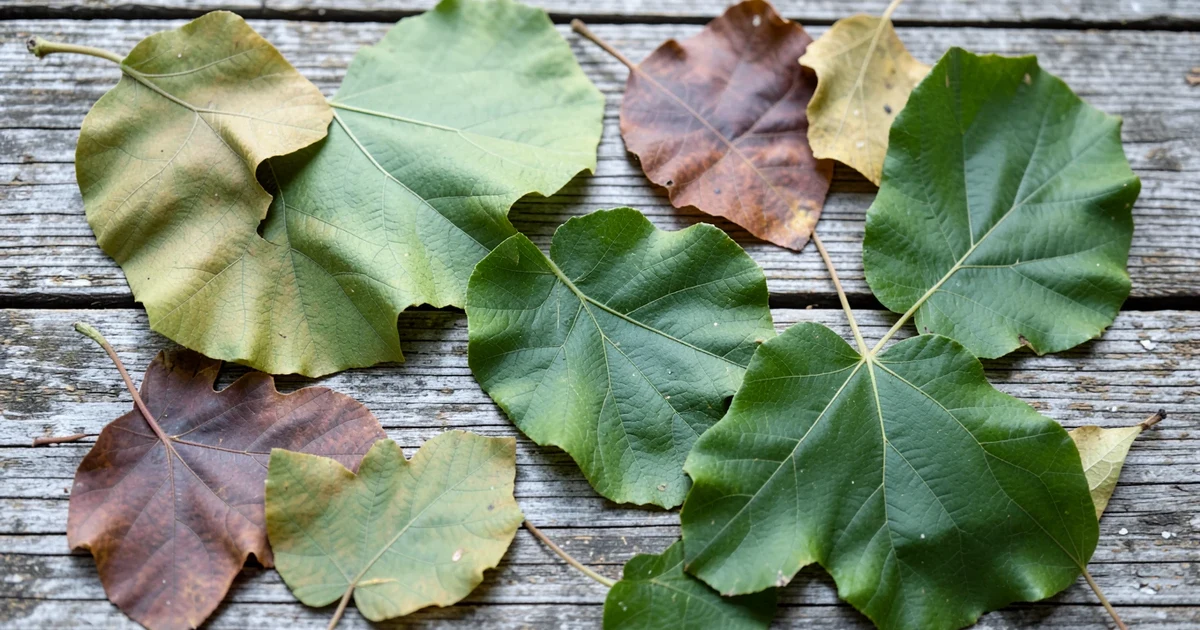
Every tree key ever written asks the same two questions before anything else, and both are asked in words nobody is taught: is the leaf simple or compound, and is the margin entire, toothed or lobed.
Get those two right and a key works. Get them wrong and it sends you confidently to the wrong page.
Simple or compound
A simple leaf is one blade on one stalk. A compound leaf is one leaf divided into several leaflets, all sharing a single stalk.
The trap is that a compound leaf looks exactly like a small branch carrying several simple leaves. Ash, walnut, hickory and sumac all get counted as the wrong thing this way.
Find the bud. This is the whole test, and it never fails:
- A bud sits in the angle where a leaf joins the twig.
- There is never a bud at the base of a leaflet.
So follow the stalk down. If you reach a bud, everything you passed was one leaf. No bud where the green stalk meets the next green stalk means you are still inside a single compound leaf.
Two follow-ups:
- Pinnate — leaflets in two rows along a central stalk, like a feather. Ash, walnut, hickory.
- Palmate — leaflets radiating from one point, like fingers. Horse chestnut, buckeye.
- Twice-compound — the leaflets are themselves divided. Honey locust, Kentucky coffeetree.
Margins: entire, toothed, lobed
Now the edge of the blade — or of each leaflet, if compound.
| Margin | Definition | Trees |
|---|---|---|
| Entire | Smooth, unbroken | Flowering dogwood, magnolia, redbud |
| Toothed | Small serrations along a continuous edge | Beech, birch, elm, cherry |
| Lobed | Deep projections, sinuses cutting toward the midrib | Oaks, maples, sycamore, sassafras |
The line between toothed and lobed causes most of the trouble. The working rule: if the indentation cuts less than a quarter of the way to the midrib it is a tooth; if it cuts most of the way it is a lobe. American beech has small even teeth on an edge that never really breaks. White oak has deep rounded fingers.
Some leaves are both — lobed overall, with teeth along the lobes. Red oak is the standard case, and its teeth end in bristle tips, which is the character that splits the whole oak genus.
The oak split, which is worth memorising
North American oaks divide into two groups on lobe tips alone:
- White oak group — lobes rounded, no bristle at the tip. Acorns mature in one season and are less bitter.
- Red oak group — lobes pointed, each tipped with a fine bristle. Acorns take two seasons.
Hold the leaf up and look at the tips. It takes a second and it halves the list.
Toothing, in more detail
Once you know the edge is toothed, the pattern of teeth separates species:
- Singly toothed — one size of tooth, evenly spaced. Beech.
- Doubly toothed — large teeth with smaller ones on their edges. Birches, elms, hornbeam.
- Asymmetric base — the blade meets the stalk unevenly, one side lower than the other. Elms and basswood, and it is diagnostic.
Lobing, in more detail
- Pinnately lobed — lobes arranged along a central midrib, feather-fashion. Oaks.
- Palmately lobed — lobes radiating from the stalk. Maples, sycamore.
- Lobe tips — rounded (white oak, sugar maple) or pointed (red oak, silver maple).
- Sinus depth — silver maple is cut nearly to the base; sugar maple's sinuses are shallow and U-shaped; Norway maple's are shallow and the leaf is wider than long.
Norway maple has one more trick: snap the stalk and it bleeds a milky white sap. Sugar maple's is clear. It settles the pair instantly, and the two are the most commonly confused street trees in the country.
Putting it in order
Leaf characters are the second question, not the first. Start with arrangement, because it is visible from further away and eliminates more: opposite or alternate.
Then simple or compound, then the margin, then the detail. Four steps, in that order, will place almost any broadleaf tree in eastern North America into a group of two or three.
For a tree with no leaves on it at all, the characters shift to buds, twigs and bark — and winter tree identification covers how those combine.
Species referenced
Start here: opposite or alternate?
Look at where the leaves join the twig. Are they in matched pairs directly across from each other, or staggered one after another? The vast majority of trees are alternate, so finding an opposite tree removes almost everything else in one step.
In North America, opposite-leaved trees are remembered as MAD Cap Horse: Maple, Ash, Dogwood, Caprifoliaceae (viburnums and elders), and Horse chestnut. That is very nearly the whole list.
Check partway along a healthy twig rather than at the tip, where crowding can make alternate leaves look paired. And check more than one twig.
Keep reading
- Opposite or Alternate? The Question That Halves the AnswerOnly a handful of North American trees have opposite leaves. Checking this first eliminates most species in seconds — here is how to read it, and the mnemonic that lists them.
- Identifying a Tree by Its BarkBark changes with age, which is why most bark guides fail. Work with texture, direction and colour under the surface rather than matching a photograph.
- Identifying a Tree From a Photograph: What Actually WorksPhoto identification succeeds and fails in predictable ways. Which four photographs to take, and why a picture of the whole tree is the least useful of them.