

The Parts of a Mushroom You Have to Check
By IdentifyThese Editorial · Reviewed · 3 min read
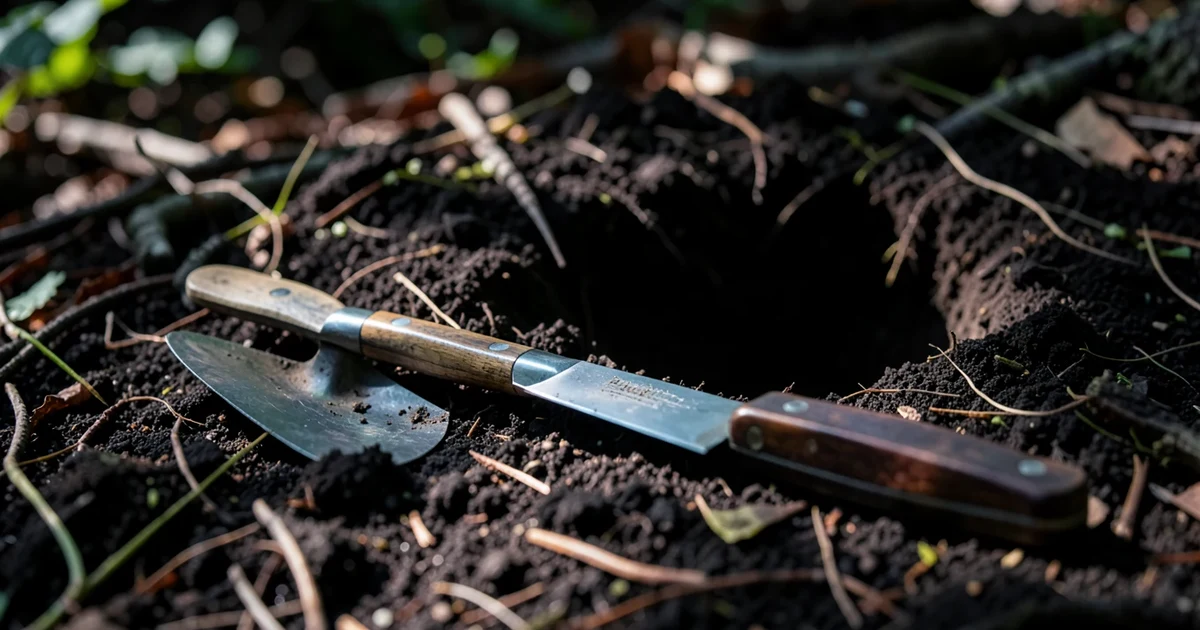
Every mushroom key asks about the same handful of structures, and two of them are routinely destroyed before anyone looks at them.
Nothing on this page is a substitute for an expert identification of anything you intend to eat.
Dig, do not pull
This is the single most important habit.
The volva — a cup or sac at the base of the stem — is often entirely below the soil surface. It is the defining feature of the genus responsible for the overwhelming majority of fatal mushroom poisonings, and pulling a mushroom leaves it in the ground.
Use a knife or a trowel and lift the whole thing, base included. Then brush the soil off and look.
The Amanita check covers why this one habit is worth more than learning any number of edible species.
The six features
1. The cap. Shape (convex, flat, funnel-shaped, conical), surface (dry, sticky, scaly, smooth), colour, and whether the margin is rolled under or straight. Note whether the surface peels.
Cap colour is the least reliable of everything here — it changes with age, weather and light.
2. The underside. Gills, pores, teeth, or a smooth surface. This is the first branching question in most keys, and it is covered in its own right in gills, pores or teeth.
For gills specifically:
- Attachment — free of the stem, attached, or running down it. This is diagnostic and it is what separates chanterelles from their dangerous lookalike.
- Spacing — crowded or widely spaced.
- Colour, and critically whether it changes with age. Gills that stay white while the mushroom matures are a warning sign, because spores that never darken the gills are white spores.
3. The stem. Whether it is central or off to one side, solid or hollow, its texture, and whether the base is bulbous.
4. The ring (annulus). A skirt, collar or ring of tissue on the stem, left by the partial veil that covered the gills when young. Note whether it is present, where on the stem it sits, whether it is a firm skirt or a fragile zone of fibres, and whether it moves.
5. The volva. The cup at the base, left by the universal veil that enclosed the whole young mushroom like an egg. It varies from a clean membranous sac to concentric scaly rings on a bulbous base.
A ring and a volva together on a white-gilled mushroom is the deadly Amanita signature.
Its apparent absence is not reassurance — it may still be in the soil, or it may have been damaged.
6. The flesh. Cut the mushroom lengthwise, from cap through stem, and look at the cut face.
- Does it change colour? Blue, red, brown, and how fast.
- Is the stem solid, hollow, or chambered?
- Is there anything inside that should not be — an outline of a developing mushroom, which is what turns a supposed puffball into a young Amanita.
The features that come later
Spore print colour. Not visible on the living mushroom, and it separates genera that look identical. A few hours on paper. How to take a spore print covers the method and why it matters so much.
Smell. Genuinely diagnostic in some groups — aniseed, almonds, radish, phenol, raw potato. Cut the flesh and smell the cut surface.
Habitat and substrate. What it is growing on and near, which is a hard identifying feature rather than context. Soil, wood, dung, and which tree species are nearby. Many species are specific to one tree genus.
Growth habit. Single, scattered, clustered from a common base, or in a ring.
The record to make
Before moving anything:
- Photograph it in place, from the side, with the cap and stem visible.
- Photograph the underside.
- Dig it up and photograph the base with the soil brushed off.
- Note the substrate and the nearby trees.
- Cut one lengthwise and photograph the cut face.
- Set a spore print going.
That set answers most of what an expert will ask. A single photograph of a cap from above answers almost nothing, which is why so many identification requests cannot be met.
The warning that is worth repeating
There is no general rule that separates edible from deadly. Not colour, not whether animals eat it, not whether it peels, not silver spoons, not whether it grows on wood, not smell, not taste.
Every one of those is folklore, and each of them has killed people. The features above are how identification is actually done, one species at a time.
Species referenced
Read this before anything else
- Never eat a wild mushroom identified by a website or an app.That includes this one. These tools narrow possibilities; they cannot see your mushroom, its base, its smell or its habitat, and the difference between a meal and a liver transplant is sometimes a feature buried in the soil.
- Get it confirmed in person by an experienced local forager or a mycological society. Most regions have one, most run free identification sessions, and they will look at the actual specimen.
- Dig, do not pull. The cup at the base of a death cap is often underground. Pulling the mushroom leaves the most important feature in the soil.
- If someone has eaten a wild mushroom and feels unwell, call poison control now — in the US, 1-800-222-1222. Do not wait for symptoms to worsen. Amatoxin poisoning has a false recovery phase, and delayed treatment is what makes it fatal. Save any uneaten pieces for identification.
Keep reading
- The Amanita Check: Dig It Up, Every TimeMost fatal mushroom poisonings are one genus. Two features identify it, one is usually underground, and pulling the mushroom rather than digging destroys the evidence.
- How to Take a Spore Print — and Why It Matters So MuchA spore print costs nothing, takes a few hours, and separates several deadly mushrooms from the edible species they resemble. Here is how, and what each colour rules out.
- Can You Get Poisoned by Touching a Mushroom?Essentially no — the toxins have to be eaten. Why the myth persists, the two genuine exceptions, and why over-caution here makes identification harder.