

Is It Really a Nutrient Deficiency? Usually Not
By IdentifyThese Editorial · Reviewed · 3 min read
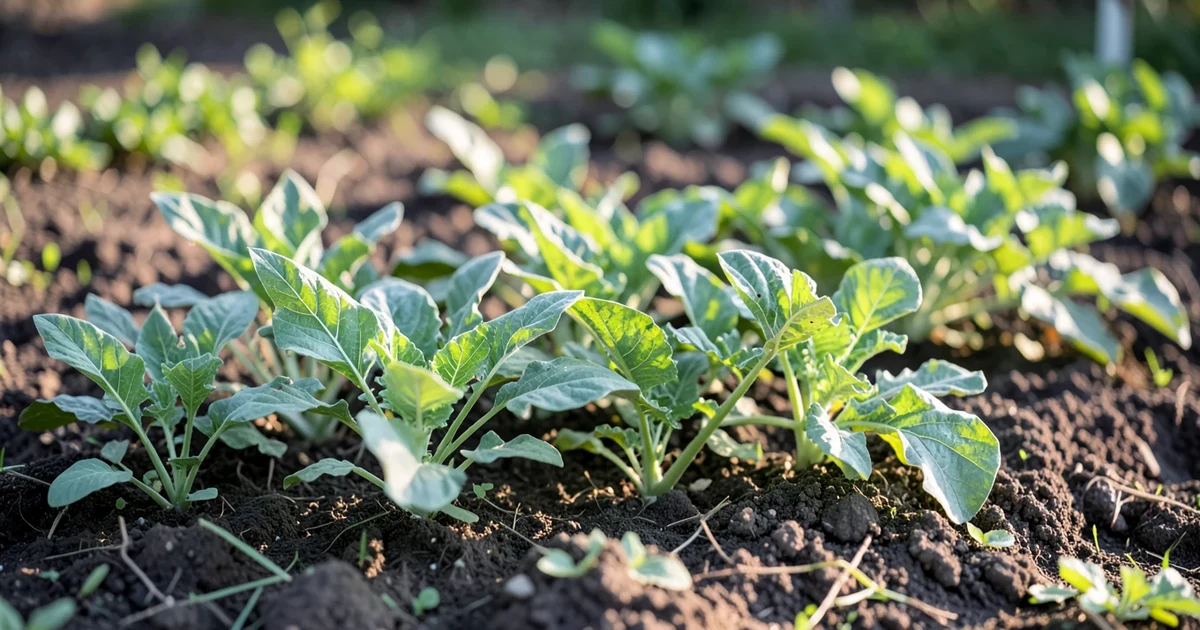
Pale, yellow or oddly-coloured leaves get treated with fertiliser more often than any other symptom, and most of the time the soil already contains the nutrient.
The plant cannot get at it. That is a different problem, and adding more of what is already there does not solve it — often it makes it worse, because fertiliser salts damage the roots doing the absorbing.
Before reaching for a bottle, there are two questions worth asking.
Question one: old leaves or new leaves?
This is the whole diagnostic framework, and it comes from a single fact: some nutrients move around inside a plant and some do not.
Mobile nutrients — nitrogen, phosphorus, potassium, magnesium. When supply runs short, the plant strips them out of old leaves and sends them to new growth. Symptoms appear on the oldest leaves first.
Immobile nutrients — iron, calcium, sulphur, manganese, boron. Once placed, they stay. A shortage shows up wherever tissue is being built. Symptoms appear on the newest leaves.
So:
| Where | Pattern | Likely |
|---|---|---|
| Oldest leaves | Uniform pale yellowing, whole leaf | Nitrogen |
| Oldest leaves | Yellow between the veins, veins stay green | Magnesium |
| Oldest leaves | Brown scorched margins | Potassium |
| Oldest leaves | Dark, dull, purplish tinge | Phosphorus |
| Newest leaves | Yellow between veins, veins sharply green | Iron |
| Newest leaves | Distorted, stunted, dying growing tips | Calcium or boron |
| Newest leaves | Uniformly pale, whole leaf | Sulphur |
The magnesium and iron patterns look alike — both are interveinal — and the position on the plant is what separates them. Old leaves: magnesium. New leaves: iron.
Why leaves turn yellow takes the same "start with where" approach and covers the non-nutritional causes in more depth.
Question two: is anything else wrong?
Because a real shortage in the soil is uncommon in a garden that has ever had compost added, and the following produce identical symptoms:
- Soil pH. The most frequent cause of iron chlorosis by a wide margin. Iron is abundant in almost all soils and becomes unavailable above about pH 7. Pin oaks, blueberries, azaleas, rhododendrons and citrus in alkaline soil go yellow between the veins while surrounded by iron. Adding iron to alkaline soil largely fails; the pH is the variable.
- Waterlogged roots. Roots that cannot breathe cannot absorb, so a drowned plant shows nitrogen deficiency symptoms in wet, nitrogen-rich soil. This is the single most common false positive.
- Root damage or restriction. Pot-bound, girdled, voles, construction, compaction.
- Cold soil. Uptake slows sharply below about 12 °C. Spring purpling on maize and tomatoes looks exactly like phosphorus deficiency and disappears as the soil warms, without intervention.
- Drought. Nutrients move to roots dissolved in water. Dry soil is functionally deficient soil.
The order to work in
- Check the soil moisture and the roots. Most of the false positives above are visible here.
- Check pH if the pattern is interveinal on new growth. A cheap test is enough to rule it in or out.
- Consider the season. Cold soil in spring, and old leaves yellowing in autumn, are both normal.
- Look at the pattern and the position using the table above.
- Then, if it still looks like a deficiency, do a soil test rather than guessing. A test costs little and tells you which of fourteen nutrients is actually short.
Feeding without a diagnosis
The main risks of guessing:
- Excess nitrogen produces soft growth, delayed flowering and fruiting, more aphids, and blossom end rot in tomatoes.
- Excess phosphorus interferes with iron and zinc uptake and runs off into waterways. Most garden soils that have been composted for years are already high in it.
- Epsom salts, the universal internet remedy, supply magnesium that competes with calcium and potassium uptake. Useful only for a confirmed magnesium deficiency.
- Salt build-up in containers from repeated feeding, which produces brown leaf tips — a symptom people then treat with more feeding.
The one that usually is real
Nitrogen, on a lawn, on a heavily-cropped vegetable bed, or on anything in a container that has been in the same soil for a season. Nitrogen leaches, plants use a lot, and container mix has almost no reserve.
Uniform pale green across older growth, on a plant in well-drained soil that has not been fed — that one, feed. Almost everything else deserves the checks first.
Problems referenced
Check these two things first
- Push a finger into the soil, two knuckles deep. Wet soil plus a wilting plant means too much water, not too little — and it is the commonest reason a plant is dying. Dry soil plus crisp leaves means the opposite. The leaves look nearly identical either way, so the soil is what tells you.
- Turn a damaged leaf over. Half of all diagnoses live on the underside: fuzz means downy mildew, fine webbing means spider mites, clusters of insects mean aphids. Nothing on the top of a leaf is as informative.
Most garden problems are cosmetic and resolve without treatment. Reach for a spray last, not first.
Keep reading
- Black Spots and Black Leaves: Six Different ProblemsBlack on a leaf can be fungal, bacterial, an insect by-product, cold damage or sunburn. The halo, the shape and whether it rubs off separate them.
- Leaves Curling Up or Curling Down? The Direction Tells You WhyCurling upward and inward is usually water stress or heat. Curling downward and outward points at overwatering, root damage or herbicide. Direction narrows it fast.
- When Not to Spray: Most Plant Problems Fix ThemselvesFungicides do nothing against pests, nutrients or watering faults — and most garden damage is cosmetic. A short guide to when treatment helps and when it just costs money.