
Tiny Flies Around a Houseplant: Fungus Gnats, and the Two Impostors
By IdentifyThese Editorial · · 3 min read
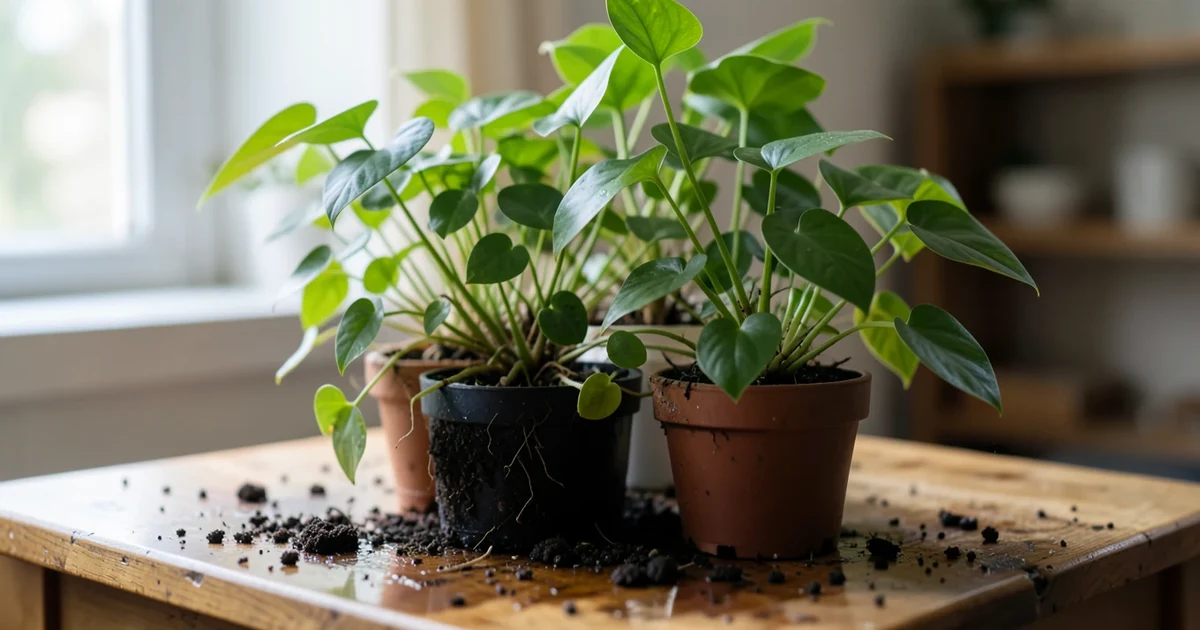
Small dark flies drifting up when you water, walking on the soil surface, ending up on windows and in drinks. Almost always fungus gnats, and almost always the same underlying cause.
Confirming it is a fungus gnat
- 2–4 mm, dark, slender, with long legs and visibly long antennae.
- Weak, erratic flight — they drift rather than fly, and are easy to catch.
- They come out of the soil rather than from a window.
- The larvae, if you look, are translucent with a distinct shiny black head, in the top 2–3 cm of soil.
The two things mistaken for them:
Fruit flies — rounder, tan-brown, often red-eyed, fly competently, and are interested in fruit and drains rather than in soil. If they hover over a fruit bowl, that is what they are.
Whiteflies — white rather than dark, on leaf undersides rather than soil, and they rise in a cloud when the plant is disturbed. They feed on the plant and produce honeydew, which fungus gnats do not; sticky leaves point at them and at the others in sticky leaves and honeydew.
Why they are there
Fungus gnat larvae eat fungi and decaying organic matter in consistently damp soil. That is the entire requirement.
A pot that stays wet in the top few centimetres is habitat. A pot whose surface dries between waterings is not. Everything else — peat-heavy mixes, low light, cool rooms, a saucer that never empties, winter overwatering — matters only because it keeps that top layer damp.
Which is why an infestation is usually a symptom of a watering habit, and often arrives alongside the early stages of root rot.
What actually works
Let the top dry. Water thoroughly, then wait until the top 3–5 cm are dry to the touch. This alone ends most infestations within two or three weeks, because the larvae cannot survive it. It is also better for nearly every houseplant.
Bottom-water. Water into the saucer and let the pot draw it up. The surface stays dry and the roots still drink.
Cover the surface. A centimetre of coarse sand, fine gravel or horticultural grit dries fast and gives the adults nowhere to lay. Effective and immediate.
Sticky yellow traps. These catch adults, which lowers the next generation and, more usefully, tells you whether numbers are falling. Treat them as a monitor as much as a control.
Bti — Bacillus thuringiensis israelensis, sold as mosquito bits or dunks. Steeped in water and used to water the plant, it kills larvae specifically and affects nothing else. This is the one targeted treatment worth using, and it needs repeating as new eggs hatch.
Hydrogen peroxide drenches get recommended constantly. They kill larvae on contact and do nothing about the conditions, so the gnats return. They can also damage fine roots at the concentrations usually suggested.
What does not work
- Spraying the adults. Two weeks later a new generation emerges. The adults live about a week and are not the population.
- Repotting alone. New mix is often already carrying eggs, and if the watering habit is unchanged the new pot becomes habitat too.
- Cinnamon, dish soap, vinegar bowls. Vinegar attracts fruit flies, not fungus gnats — they are not interested in fermentation.
When they matter
For an established plant, adults are a nuisance and nothing more. There is no reason to be alarmed by a few.
They matter for:
- Seedlings and cuttings, where larvae feeding on the tiny root system genuinely kills plants.
- Heavy infestations, where larvae move from organic matter onto fine roots.
- Propagation setups, which are permanently damp by design and need the sand or grit layer as standard practice.
The useful reframe
If you have fungus gnats, you probably have soil that stays wetter than most houseplants want. Fixing that solves the flies, reduces root rot risk, and generally improves the plants — which is more than any spray was going to do.
Check the soil with a finger before every watering for a month. It is the single habit that resolves the largest number of houseplant problems, including brown leaf tips and most of the yellowing in why leaves turn yellow.
Problems referenced
Check these two things first
- Push a finger into the soil, two knuckles deep. Wet soil plus a wilting plant means too much water, not too little — and it is the commonest reason a plant is dying. Dry soil plus crisp leaves means the opposite. The leaves look nearly identical either way, so the soil is what tells you.
- Turn a damaged leaf over. Half of all diagnoses live on the underside: fuzz means downy mildew, fine webbing means spider mites, clusters of insects mean aphids. Nothing on the top of a leaf is as informative.
Most garden problems are cosmetic and resolve without treatment. Reach for a spray last, not first.
Keep reading
- Sticky Leaves: What Honeydew Means and Who Is Making ItSticky residue is insect excretion, and it always comes from above. Four sap-feeders produce it, and each leaves a different sign on the plant.
- Drooping After Repotting: What Is Normal and What Is NotTransplant shock has a shape and a timescale. Most intervention makes it worse — here is what recovery looks like and when to actually worry.
- Blossom End Rot Is Not a Calcium DeficiencyThe soil almost always has enough calcium. The problem is getting it to the fruit, which is a watering problem — and that is why the sprays and tablets fail.